
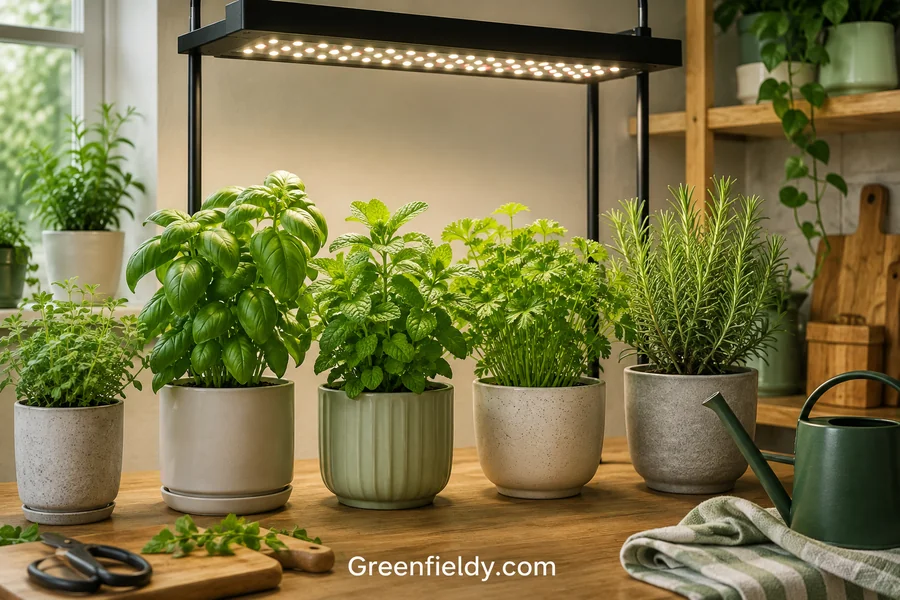
Anyone who has ever purchased a basil plant, watched it turn yellow and discarded it in two weeks knows what I’m talking about. The number-one bane of most indoor herb gardens is not enough light. That’s exactly why so many home cooks are learning how to grow herbs indoors with grow lights. Better than the windowsill that has all dead plants.Plus, in summer or winter, in any climate, in any apartment with no natural light.
This will show you the entire process. No nonsense, no speculation. What really works.
Quick Answer: How to Grow Herbs Indoors With Grow Lights
How to grow herbs indoors with grow lights: Place a full-spectrum LED grow light 6 to 12 inches above your herbs and run it 12 to 16 hours daily. Plant in soil that drains well, water only when the top inch feels dry & give the pots a quarter turn each week so they don’t grow lopsided.
That covers the basics. The details below are what separate a thriving plant from a sad one.
Why Your Windowsill Probably Isn’t Cutting It
A sunny window looks like enough light. It usually isn’t. Most homes get two to four hours of usable light through glass on a good day, and herbs want closer to six, sometimes eight. Glass also filters out part of the spectrum plants need to build sturdy stems instead of thin, reaching ones.
A grow light just removes the guesswork. You control the brightness, the hours, even the color of light hitting the leaves. Plants stop leaning toward the window and start growing straight up, full and green.
What You’ll Need (It’s Less Than You Think)
No greenhouse. No grow tent. Just a handful of things.
| Item | Why It Matters | Budget Pick |
| LED grow light | Full-spectrum light herbs actually use | Clip-on LED panel |
| Pots with drainage holes | Keeps roots from sitting in water | Plain plastic nursery pots |
| Well-draining potting mix | Healthy root system | Potting soil plus perlite |
| Outlet timer | Keeps light hours consistent | Cheap mechanical timer |
| Herb seeds or starts | The actual plants | Basil, mint, parsley, thyme |
Most people can put this together for around $50 to $60. Less if you already have pots lying around.
Read Also: Garden Cover for Winter
How to Grow Herbs Indoors With Grow Lights, Step by Step
1. Get a Light That’s Actually Full-Spectrum
Skip the old red-and-blue grow bulbs. They work, technically, but full-spectrum LED does a far better job copying daylight, and it covers nearly every common kitchen herb.
Look for something in the 5000K to 6500K range. It supports leaf growth and stem strength at the same time, which is what you’re after.
2. Get the Distance Right, Then Keep Checking It
Too close and leaves scorch at the edges. Too far and the plant stretches, thin and pale, reaching for light that isn’t there. Rough guide:
- LED panels: 6 to 12 inches above the plant
- Fluorescent tubes: 4 to 6 inches, since they run cooler but weaker
Raise the light as the herb grows. Check it weekly, it’s easy to forget.
3. Don’t Overthink the Schedule
Herbs don’t need light nonstop. Most do best with 12 to 16 hours a day. Less, and growth crawls. Leave it on 24/7 and you can actually stress the plant rather than help it along.
A $10 outlet timer handles this so you don’t have to remember.
4. Some Herbs Just Do Better Indoors Than Others
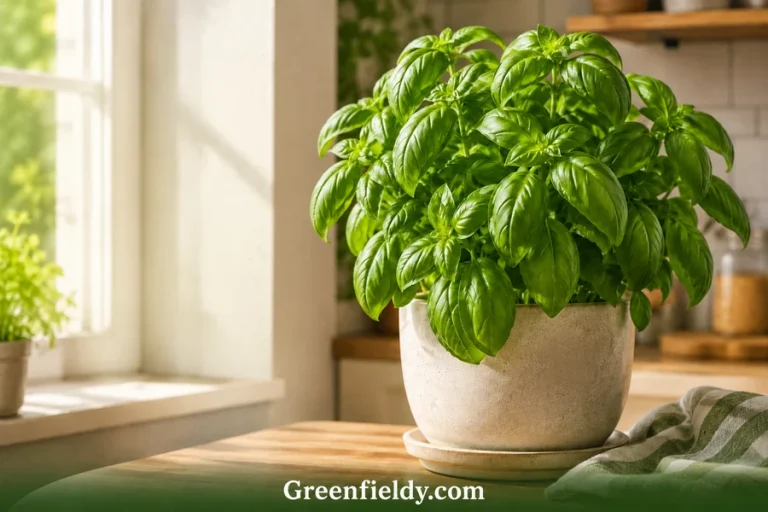
Basil, mint, parsley, chives, thyme, oregano. These forgive mistakes and grow fast under artificial light. If you’re starting out, pick one of these, basil especially. It’s nearly impossible to kill under a decent light.
Rosemary, lavender, and dill are pickier. They want more light and more space, so maybe save those for round two.
5. Water the Soil, Not the Calendar
This trips up more people than anything else on this list. Watering on a fixed schedule feels responsible, but it’s usually how herbs end up overwatered. Stick a finger an inch into the soil first. Dry, water it. Still damp, leave it another day.
Overwatering kills far more indoor herbs than forgetting ever does. By a wide margin.
6. Rotate the Pots, Trim Often
Even directly under a light, plants lean slightly toward the brightest spot. A quarter turn every few days keeps growth even instead of lopsided.
And trim, even on days you’re not cooking. Cutting herbs back regularly pushes them to fill out instead of shooting up tall and thin.
Where People Usually Go Wrong
The light sitting too far away is the big one. Plants stretch, get leggy, and eventually flop over.
Skipping the timer is another. Uneven light hours throw off the plant’s growth rhythm more than you’d think.
Regular potting soil with no drainage traps water at the roots. That’s a fast way to rot.
Humidity gets ignored a lot too. Basil and mint like slightly humid air, and a dry heating vent nearby can stunt them without any obvious reason why.
And feeding matters. Indoor herbs burn through nutrients fast under constant light. A diluted liquid fertilizer every two to three weeks keeps them from stalling out.
Read Also: Pothos Moss Pole
How Long Before You See Anything?
Give it one to two weeks for visible growth once the light’s set up properly. A full harvest-ready plant takes four to six weeks, depending on the herb and how consistent you are with the schedule.
Basil and mint move fast. Rosemary and thyme take their time, but they’re worth waiting on.
Grow Lights vs Natural Light
| Factor | Grow Lights | Natural Sunlight |
| Consistency | Same every day | Shifts with weather and season |
| Light Spectrum | Full, adjustable | Cut down once it passes through glass |
| Setup Cost | Low to moderate | Free |
| Works Year-Round | Yes | Weaker through winter |
| Best For | Apartments, dim rooms | Strong south-facing windows |
If your kitchen doesn’t get direct sun most of the day, or you’re growing through winter, grow lights just perform better. Not opinion, just how it plays out in practice.
Final Thoughts
Growing herbs indoors isn’t complicated once you actually understand how to grow herbs indoors with grow lights. Get a decent light, keep the distance and hours steady, water based on the soil instead of a schedule, and trim often.
Stick with that, and you’ll have fresh basil, mint, and parsley on the counter every week, regardless of what’s happening outside.
FAQs:
Do herbs really need to grow lights indoors?
If your space gets under six hours of direct sun, yes. That’s most homes, honestly, which is why grow lights make such a visible difference.
How many hours a day should grow lights stay on for herbs?
12 to 16 hours works for most herbs. A timer keeps it steady so you’re not guessing every morning.
Can I just use a regular LED bulb instead?
You can, but it won’t cover the full spectrum plants use to grow. The herb might survive. It won’t grow as full or as fast.
What’s the best grow light for a beginner?
A full-spectrum LED panel or clip-on light, somewhere between 5000K and 6500K. Affordable, and it works for nearly every common herb.
Why are my herbs leggy even with a grow light on?
Usually the light’s too far away, or it’s not running long enough each day. Bring it closer and check the timer.
Read More Articles: How to Propagate Snake Plant
About the Author



1 thought on “How to Grow Herbs Indoors With Grow Lights (Without Losing Another Plant)”