
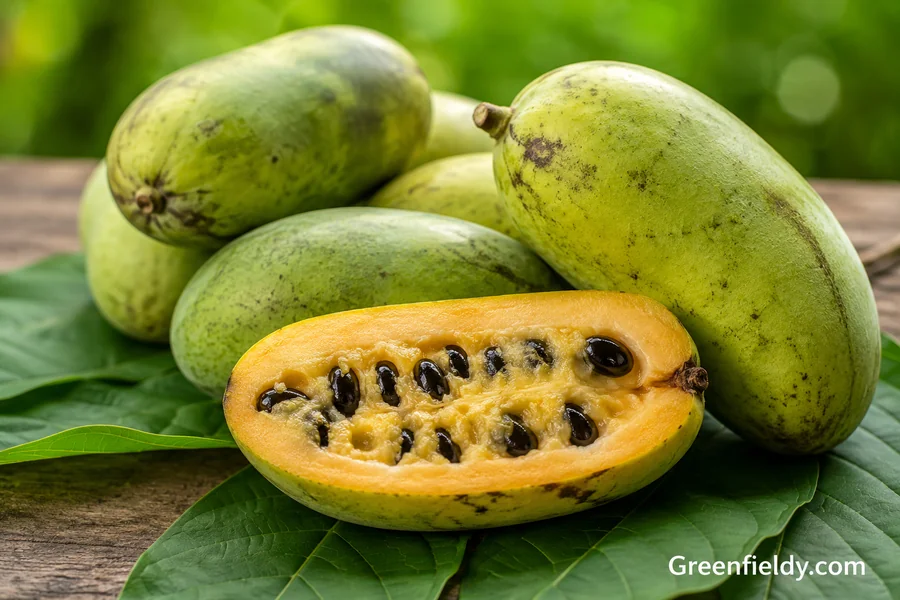
What is a pawpaw? The pawpaw is a fruit tree that is endemic to North America, commonly found in the eastern and midwestern states of the U.S. It has a very custard-like consistency and tastes like a mix of banana, mango and pineapple. Although the largest edible fruit native to the continent, most people have not seen or tasted one. Pawpaws do not travel well, and are seldom found in a grocery store, that’s because.
If you’ve seen it at a farmers market or read some glowing reviews about it online, you’ve likely had no end of questions about what exactly it is. Let’s take a closer look.
What Is a Pawpaw, Exactly?
Pawpaw (Asimina triloba) is a small tree fruit that is found growing as a wild specimen in 26 U.S. states from Florida to parts of Canada. The tree does not grow much taller than 25 feet, and it makes a good tree along rivers and streams as long as it receives some shade.
The fruit is somewhat mango-like, but short and thick, and green to yellow in colour. The flesh inside is soft, creamy and filled with big brown seeds in two rows. A pawpaw falls apart in the hand when ripe, so it was too crumbly to be a supermarket favorite.
It’s sometimes referred to as the “poor man’s banana” and “hillbilly mango. It is not an apt title for either name. It is a fruit with its own flavor profile and after tasting it, you will not mistake it for any other.
Where Do Pawpaws Grow?
Pawpaws grow wild in forests, but they’re also cultivated by small farms and home gardeners. Here’s a quick look at where you’re most likely to find them.
| Region | Growing Conditions | Season |
| Ohio Valley | Rich soil, partial shade | Late August to October |
| Appalachian foothills | Riverbanks, forest edges | September to October |
| Midwest states | Moist, well-drained soil | September |
| Southeastern U.S. | Warm climate, humid summers | Late August |
The tree needs a partner nearby for pollination since a single pawpaw tree usually can’t produce fruit on its own. That’s part of why wild groves, called “pawpaw patches,” tend to produce fruit in clusters rather than single trees scattered around.
Read More: The Vegetable That Looks Like a Cucumber But Isn’t
What Does a Pawpaw Taste Like?
This is the first question on everyone’s mind. A ripe pawpaw is sweet and banana-like with a mango-like flavor and a smooth, custard-like texture, flavored with citrus and a hint of mango. Others get the vanilla or melon notes. No two pawpaws taste exactly alike as the flavor can vary based on the tree, soil and ripeness of the fruit at the time of consumption.
It’s soft to spoon and can be eaten that way right out of the skin. No cutting with a knife will be necessary. Simply slice in half, remove the seeds and enjoy.
How to Tell If a Pawpaw Is Ripe
When a pawpaw yields slightly to gentle pressure it is ripe, similar to a ripe avocado or peach. The skin may green up and become yellow and spotted. After a few more days at room temperature, if it still feels firm, place it back in the refrigerator.
Pawpaws that are not ripe are bitter and will not be custardy. Then as they over-ripe they get mushy and begin to ferment, some people love that, but most prefer to have them at the sweet spot.
Nutritional Value of Pawpaws
Pawpaws aren’t just interesting to eat, they’re also good for you. Here’s what you get in a typical serving.
| Nutrient | Amount per 100g | Benefit |
| Vitamin C | 18mg | Supports immune function |
| Potassium | 345mg | Helps regulate blood pressure |
| Magnesium | 21mg | Supports muscle and nerve function |
| Iron | 0.6mg | Aids red blood cell production |
| Protein | 1.2g | More protein than most fruits |
Pawpaws also contain antioxidants and a decent amount of fiber, which makes them a filling snack rather than just a sugary treat.
How to Eat a Pawpaw
Eating a pawpaw is simple, but a few tips make the experience better.
- Cut the fruit in half lengthwise.
- Scoop out the seeds with a spoon, they’re not edible.
- Eat the flesh straight from the skin, or scoop it into a bowl.
- Use it in smoothies, ice cream, or baked goods if you don’t want to eat it raw.
Some people freeze the pulp so they can enjoy pawpaws outside of the short growing season. Frozen pulp works well in smoothies and desserts without losing much flavor.
Read Also: The Three Sisters Crops
Why Pawpaws Aren’t in Grocery Stores
Pawpaws bruise easily and will only keep for several days after ripeness. Now shipping them long distances simply doesn’t work with today’s supply chains. This is why most people will only see pawpaws at their local farmers market, at a small orchard or by picking them directly off the tree.
This short life span is also contributing to the fact that pawpaws remain a regional secret. They can’t be stored in a warehouse or truck for weeks, as apples or bananas can be.
A Quick History Lesson
For centuries, pawpaws have been eaten by North Americans. European settlers did not come until after indigenous communities had been growing and trading pawpaws. George Washington was said to have loved eating the pawpaw as dessert and Thomas Jefferson grew them at Monticello.
In spite of this long history, pawpaws began to gradually disappear from the main stream of commercial agriculture as commercial planting focused on plants that would ship and long store. But pawpaws have made a comeback in recent years now that they are part of the native and heirloom food craze.
Pawpaw vs Papaya: Are They the Same Thing?
No, and it’s something that keeps occurring. There are no pawpaws or papayas at all, but they are from distinct plant families. Papayas are tropical fruits, with orange flesh and black seeds. The Pawpaw is a species of temperate North American plant with pale yellow pulp and large brown seeds.
“Pawpaw” is also a nickname for the papaya in some countries, which can cause some confusion. In the U.S., however, when you hear the word pawpaw, you’re likely to think of the native fruit mentioned here.
Final Thoughts
So, what is a pawpaw?
A native North American fruit that tastes of banana, mango & citrus, and has a custard-like texture. Good for you, not found in the shops and worth the search if available. You can pick one up at a farmer’s market or from a tree in your own backyard, but there’s no easier way to sample a bit of American cuisine than by eating a pawpaw.
FAQs:
What is a pawpaw fruit?
A pawpaw is a native North American fruit with a custard-like texture and a flavor similar to banana and mango.
Is pawpaw the same as papaya?
No. Pawpaws and papayas are different fruits from different plant families, though the names are often confused.
What does a pawpaw taste like?
A pawpaw tastes like a mix of banana, mango, and citrus, with a soft, creamy texture.
Where can I buy pawpaws?
Pawpaws are mostly sold at farmers markets, small orchards, and specialty stores, since they don’t ship well.
Can you eat pawpaw seeds?
No, pawpaw seeds are not edible and should be removed before eating the fruit.
When is pawpaw season?
Pawpaw season typically runs from late August through October, depending on the region.
Read More Articles: True Great Gardens of the World
About the Author

1 thought on “What Is a Pawpaw? America’s Forgotten Fruit Explained”