

Snake is one of the easiest houseplants to propagate. If you are looking for more plants and don’t want to purchase any, learning how to propagate snake plants is just what you need.
Fortunately, Propagate snake plant doesn’t require a high level of gardening expertise. As long as you have a healthy parent plant and some patience, you can make several new plants in your home.
With proper care, water propagation, soil propagation, division, and rhizome propagation can all yield vigorous and healthy snake plants.
How Do You Propagate a Snake Plant?
Propagate snake plant can be done by cutting a leaf into sections and then placing them in water or soil. Mature plants can also be separated by rooting up. For most snake plant cuttings, roots will form 4-8 weeks later depending on growing conditions.
Snake Plant Propagation Facts at a Glance
| Factor | Details |
| Botanical Name | Sansevieria (Dracaena trifasciata) |
| Best Propagation Methods | Water, Soil, Division, Rhizomes |
| Best Season | Spring and Summer |
| Rooting Time | 4–8 Weeks |
| Difficulty Level | Easy |
| Light Requirement | Bright Indirect Light |
| Water Needs | Low |
| Beginner-Friendly | Yes |
Why Propagate a Snake Plant?
People have lots of reasons to multiply their snake plants.
Some people want to make their indoor garden bigger.
Others want to save some money or give plants to their friends and family.
The good things about multiplying snake plants are:
- Creating snake plants for free
- Making old snake plants look nice again
- Giving snake plants as gifts to people
- Filling up spaces in the house, with snake plants
- Keeping our kinds of snake plants
A single healthy snake plant can make lots of new snake plants over time.

Understanding How Snake Plants Grow
To begin with, it is helpful to understand how snake plants grow in an environment. Snake plants. Spread through underground stems that are known as rhizomes. These snake plant rhizomes create shoots that are known as snake plant pups. The leaves of the snake plant also have energy to produce roots for the snake plant when the leaves are properly taken care of and propagated. This is the reason why many different methods of propagating snake plants can be successful.
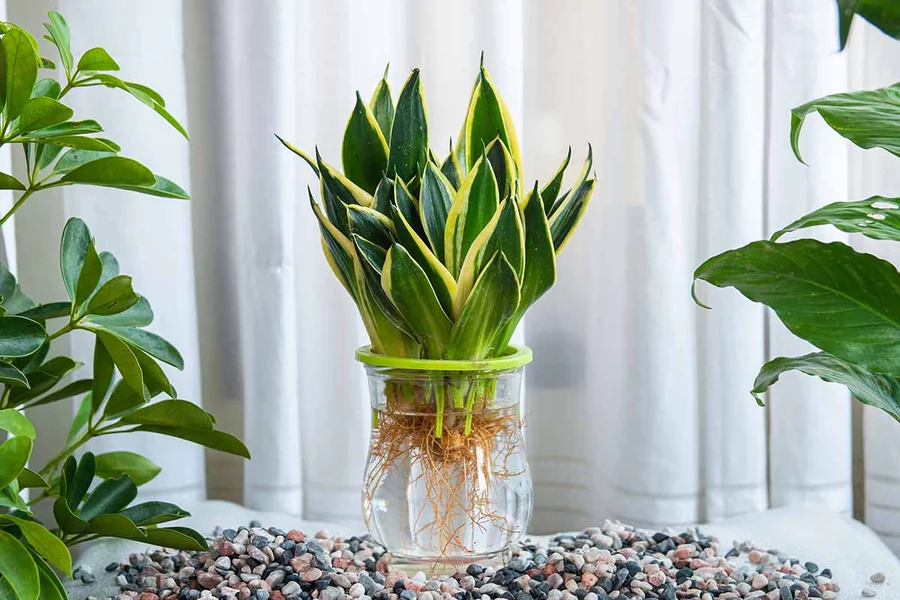
How to Propagate Snake Plant Through Leaf Cuttings in Water
Water propagation is one of the most popular methods because it allows you to watch roots develop.
What You Need
- Healthy snake plant leaf
- Sharp scissors or knife
- Clean jar or glass
- Fresh water
Pass the leaf through the aperture. Pass the healthy leaf through the aperture (Step 1).
Select a leaf that is free from damage and disease and has reached mature growth.
Do not allow yellowing or weak leaves, as these can regenerate slowly.
Step 2: Cut the Leaf
Just cut through the leaf close to its base.
Then cut it into segments that are approximately 3-5 inches long.
Note the bottom of each section. Doing this upside down will not allow it to root.
Put in water (Step 3). Step 3: Put in water.
Place the bottom part of each cutting in a jar of water.
Only the bottom is to be filled.
Routine Water Change: Regularly change the water.
Change the water on a weekly basis.
Clean water will inhibit the growth of bacteria and prevent rot.
The children sit for 15 minutes. Step 5: Wait for Roots.
Roots are likely to emerge after a few weeks.
When the roots grow 1-2 inches long, you can transplant cuttings into soil.
How to Propagate Snake Plant in Soil
Many gardeners prefer soil propagation because it reduces transplant shock later.
Supplies Needed
- Snake plant leaf
- Potting mix
- Small container
- Sharp knife
Step 1: Prepare Leaf Sections
Cut a healthy leaf into multiple pieces.
Allow the cut edges to dry for one or two days.
This drying period helps prevent rot.
Step 2: Plant the Cuttings
Insert the bottom end of each section into well-draining soil.
Keep them upright.
Step 3: Water Lightly
Moisten the soil slightly.
Do not soak it.
Snake plants dislike excessive moisture.
Step 4: Provide Bright Light
Place the pot near a bright window with indirect sunlight.
Avoid intense direct afternoon sun.
Step 5: Monitor Growth
Roots and new shoots often develop within several weeks.
Be patient because soil propagation can seem slower than water propagation.
Read More: Hardening Off Plants
How to Propagate Snake Plant by Division
Why Division Is the Fastest Method
Division produces mature plants instantly.
Unlike leaf cuttings, divisions already have roots and established growth.
When to Divide
A snake plant is ready for division when:
- The pot becomes crowded
- Multiple pups are visible
- Roots fill the container
- Growth slows significantly
Step-by-Step Division Process
Remove the Plant
Gently remove the plant from its container.
Shake off excess soil.
Locate Natural Sections
Look for clumps connected by rhizomes.
Each section should have roots and leaves attached.
Separate the Plant
Use a clean knife if necessary.
Cut between connected sections carefully.
Replant Immediately
Place each division into its own pot with fresh soil.
Water lightly after planting.
Benefits of Division
- Fast results
- High success rate
- Immediate mature appearance
- Preserves plant characteristics
How to Propagate Snake Plant Using Rhizomes
Rhizomes are underground stems that store nutrients and produce new growth.
This method is often overlooked but highly effective.
Steps for Rhizome Propagation
- Remove the plant from the pot.
- Find healthy rhizomes.
- Cut sections with a clean knife.
- Allow cuts to dry briefly.
- Plant in fresh potting mix.
- Keep soil slightly moist.
New shoots often emerge from rhizomes within several weeks.
Snake Plant Propagation Methods Compared
| Method | Difficulty | Speed | Success Rate | Best For |
| Water Cuttings | Easy | Medium | High | Beginners |
| Soil Cuttings | Easy | Medium | High | Low-maintenance growers |
| Division | Very Easy | Fast | Very High | Mature plants |
| Rhizomes | Moderate | Fast | High | Experienced growers |
Best Soil for Snake Plant Propagation
The right soil improves success rates significantly.
Choose a mix that drains quickly.
Good options include:
- Cactus mix
- Succulent mix
- Potting soil with perlite
- Potting soil with coarse sand
Avoid heavy soil that stays wet for long periods.
Read More: The Real Reason Rosemary Garlic
Best Light Conditions for New Snake Plants
Light affects rooting speed and overall plant health.
Ideal conditions include:
- Bright indirect light
- East-facing windows
- Filtered sunlight
- Warm indoor temperatures
Avoid:
- Deep shade
- Harsh afternoon sun
- Dark corners
Common Mistakes When Propagating Snake Plants
Many propagation failures happen because of a few avoidable mistakes.
Overwatering
Too much moisture causes root rot quickly.
Always let the soil dry partially before watering again.
Planting Upside Down
Leaf cuttings must maintain their original orientation.
Mark the bottom end before cutting multiple sections.
Using Damaged Leaves
Healthy leaves root more successfully.
Avoid leaves showing signs of disease.
Insufficient Light
Low light slows root development dramatically.
Provide bright indirect sunlight whenever possible.
Lack of Patience
Snake plants grow slowly.
Some cuttings need several weeks before visible progress appears.
Signs Your Snake Plant Propagation Is Working
You may notice:
- White roots forming
- New shoots emerging
- Firm leaf cuttings
- Fresh green growth
- Increased stability in soil
These are positive signs that propagation is progressing successfully.
How Long Does Snake Plant Propagation Take?
Propagation times vary based on the method used.
Typical Timeline
| Stage | Estimated Time |
| Cuttings Prepared | Day 1 |
| Callusing | 1–2 Days |
| Root Formation | 4–8 Weeks |
| New Shoots | 6–12 Weeks |
| Established Plant | 3–6 Months |
Environmental conditions can speed up or slow down the process.
Can You Propagate Variegated Snake Plants?
Yes. However, there is an important detail.
Leaf cuttings may not preserve the original variegated pattern.
If you want identical variegation, division is usually the best method.
Division keeps the parent plant’s appearance intact.
Read More: The Garden Songbird
Caring for Newly Propagated Snake Plants
After roots develop, focus on long-term care.
Watering
Water only when the soil feels dry.
Lighting
Provide bright indirect sunlight.
Fertilizing
Use a balanced houseplant fertilizer during active growth.
Pot Selection
Choose containers with drainage holes.
Good drainage reduces the risk of root problems.
Is Water or Soil Better for Snake Plant Propagation?
Both methods work well.
Water propagation lets you observe root development. Soil propagation requires less maintenance after rooting.
Choose water if you enjoy monitoring progress.
Choose soil if you want a simpler long-term process.
Frequently Asked Questions
1. Can I propagate snake plant from a single leaf?
Yes. A single healthy leaf can be divided into multiple sections and propagated successfully.
2. How long does it take for snake plant cuttings to root?
Most cuttings develop roots within 4 to 8 weeks under suitable conditions.
3. Should snake plant cuttings dry before planting?
Yes. Allowing cut ends to callus helps reduce the risk of rot.
4. Can I propagate snake plant directly in water?
Yes. Water propagation is one of the easiest and most popular methods.
5. Why is my snake plant cutting rotting?
Overwatering, contaminated water, poor drainage, or damaged leaves often cause rot.
6. What is the fastest way to propagate a snake plant?
Division is generally the fastest method because the separated sections already have roots.
7. Can I propagate snake plant during winter?
You can, but spring and summer usually provide faster and more reliable results.
8. Do propagated snake plants need fertilizer immediately?
No. Wait until roots and new growth become established before feeding the plant.
About the Author