So many gardeners experience the loss of healthy seedlings each spring, for no reason of disease or pests, but simply one step. Hardening off plants is a link between your grow room and the outside world. If left untreated, weeks of conscientious seed-starting can turn topsy-turvy in 48 hours. It allows your transplants to get established quickly, and continue to grow as soon as you plant them.
This guide is dedicated to the how, when and what of getting it right.
What Is Hardening Off Plants?
Ever transplanted seedlings from the house to the garden and seen them wilt, turn yellow and die in a few days — you forgot one important step! The step is called hardening off plants.
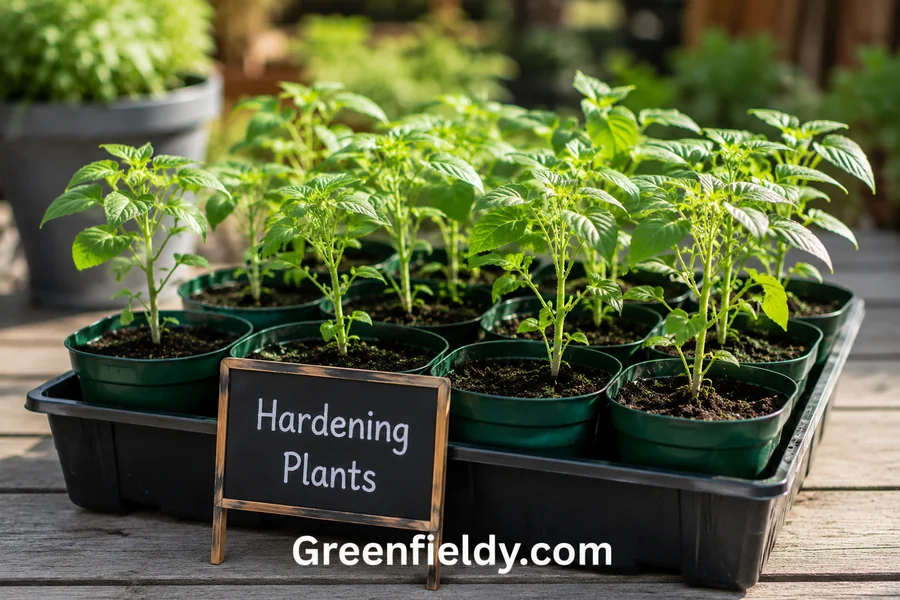
Hardening off tender seedlings is a gradual acclimatization process of seedlings grown in a protected area before being planted outside permanently. It’s not complicated. However, when it comes to ensuring survival and growth, it is not an option.
A grow light environment is a world of control for seedlings grown in a grow light or on a windowsill. Constant temperature. Filtered light. No wind. No rain. These come in the garden bed and they do have impact! Leaves are intolerant to full sunlight. The stems are not wind resistant. The roots do not tolerate temperature fluctuations in the soil.
Hardening off takes care of all that, slowly.
Why Hardening Off Plants Actually Matters
Plants aren’t fragile by nature. But they are creatures of habit. When they’ve spent 6 to 10 weeks under indoor conditions, their cell walls are softer, their stomata behave differently, and their root systems expect a stable environment.
Moving them outside without hardening off plants first causes what growers call transplant shock. Symptoms include:
- Wilting even when the soil is moist
- Bleached or scorched leaf edges
- Stunted growth after transplant
- Complete collapse within 48–72 hours
None of that has to happen. A proper hardening off schedule takes 7 to 14 days and requires almost no equipment.
Read More: When Is Mushroom Season?
When Should You Start Hardening Off Plants?
Timing matters. Start hardening off plants about 1 to 2 weeks before your intended transplant date. This means working backwards from the expected date of the last frost.
This falls in the middle of the month, between the end of March and mid-May for most gardeners in temperate areas. For tomato, pepper, cucumber or warm season crops, delay until nighttime low temperatures are consistently above 50°F (10°C).
Cool-season crops such as broccoli, kale, cabbage and lettuce can tolerate cooler temperatures and can start hardening off early — even when nights are still at 40°F (4°C).
The one rule to follow: avoid haste. An extra week of hardening off plants costs you nothing. If you miss one day or shorten the process, you could lose the entire batch.
How to Harden Off Plants: A Simple 10-Day Schedule
This is the most searched part of the topic because gardeners want a clear, actionable plan. Here’s one that works.
Days 1–2: Place seedlings outside in a shaded, sheltered spot for 1–2 hours. Bring them in before temperatures drop. Choose a calm day — avoid wind and direct sun entirely.
Days 3–4: Increase outdoor time to 3–4 hours. Move them to a spot with gentle morning sun (east-facing works well). Still avoid harsh afternoon light.
Days 5–6: Give them 5–6 hours outside. Now they can handle partial sun. Watch for wilting — if leaves droop, bring them in earlier and reduce sun exposure the next day.
Days 7–8: Push to 6–8 hours. At this point your seedlings can handle more direct sun and light wind. Leave them out through cooler mornings.
Days 9–10: Let them stay outside for most of the day, including some afternoon sun. If overnight temperatures are safe, you can start leaving them out overnight.
After this schedule, your plants are ready for permanent transplant.
This process works for vegetables, herbs, annual flowers, and most houseplants being moved outdoors for the season.
Best Conditions for Hardening Off Plants
Where you place seedlings during this process matters as much as how long they’re out there.
Shade vs. Sun Start in full shade or dappled light. Direct sun on Day 1 can bleach or scorch leaves in under an hour for plants grown under artificial light.
Wind Exposure A breeze is actually useful — it builds stem strength. But strong wind on fragile seedlings causes mechanical damage. Use a fence, wall, or cold frame as a buffer in the early days.
Temperature Windows Avoid hardening off plants on days with extreme heat (above 85°F / 30°C) or cold snaps. The goal is gradual adjustment, not extreme stress testing.
Cold Frames and Row CoversA cold frame is basically a box with a glass or plastic top and no bottom, which helps to harden off the plants. One of the most useful items a home gardener can have. Wind and temperature are also reduced and light is still allowed to pass through row covers.
Read More: Cherry Season in Florida
Common Mistakes When Hardening Off Plants
Even experienced gardeners make these errors.
Moving too fast. Skipping days because the weather looks good is the most common mistake. Stick to the schedule even when it feels unnecessary.
Forgetting to water. Containers dry out much faster outdoors than on a windowsill. Check moisture levels every day during the hardening off period.
Leaving plants out overnight too early. One unexpected cold night can undo a week of progress. Check forecasts. If temperatures are dropping near freezing, bring them in.
Using hardening off as a shortcut for unhealthy plants. If your seedlings are already leggy, yellowed, or root-bound, hardening off won’t fix underlying problems. Address those first.
Starting too late. If your transplant date arrives and you haven’t hardened off, don’t panic — but compress the schedule responsibly. Five to seven days is the minimum. Less than that significantly increases risk.
Hardening Off Plants in Different Seasons
Spring transplants are the most common scenario and the standard context for most hardening off advice. Cool nights and variable spring weather mean you need to stay alert to forecasts.
Summer transplants (moving starts outdoors in late May or June) face a different challenge: heat stress. The afternoon sun is intense. Focus your outdoor time in morning hours during the first few days.
Fall garden starts — like brassicas transplanted in late summer — benefit from hardening off too, especially if they’ve been grown indoors or in a greenhouse.
The principle stays the same across seasons: match the plant’s current environment to its new one, one step at a time.
How Long Does Hardening Off Plants Take?
The standard recommendation is 7 to 14 days. Most gardeners find 10 days to be the reliable middle ground.
Faster is possible — some growers do it in 5 to 7 days with attentive monitoring. Slower is also fine if you have the time. There’s no penalty for a longer hardening period.
What you want to avoid is anything under 5 days for plants that have been exclusively indoors under grow lights. Those seedlings need the most transition time.
FAQs
Q: What does hardening off plants mean?
A: Hardening off plants means gradually exposing indoor-grown seedlings to outdoor conditions — sun, wind, and temperature changes — over 7 to 14 days before permanent transplanting. This prevents transplant shock.
Q: Can you harden off plants in 3 days?
A: It’s not recommended. Three days is too short for most seedlings, especially those grown under grow lights. A minimum of 5 to 7 days is needed, with 10 days being ideal for strong results.
Q: Do you water plants during hardening off?
A: Yes. Plants in containers dry out faster outdoors. Check soil moisture daily and water as needed throughout the hardening off period.
Q: What happens if you don’t harden off plants?
A: Skipping hardening off plants often causes transplant shock — symptoms include wilting, leaf scorch, stunted growth, or plant death within days of moving outdoors.
Q: Can I harden off plants on a cloudy day?
A: Yes. Cloudy days are actually ideal for the first few sessions. They reduce sun stress while still exposing plants to outdoor temperatures and airflow.
Q: When should I start hardening off tomatoes?
A: Start hardening off tomato seedlings 1 to 2 weeks before your last frost date. Nighttime temperatures should be consistently above 50°F (10°C) before beginning the process.
Q: Does hardening off apply to perennials?
A: It applies to any plant that has been grown indoors or in a greenhouse — including perennials, herbs, and flowers — before being moved to an outdoor garden bed.
Final Thoughts
Hardening off plants is one of those steps that seems optional until the moment it isn’t. It takes ten days. Does not need special tools. It is also the one most crucial difference between a successful and failing transplant within a week.
We can take an herb from a windowsill to a container on the patio, a pepper plant from the lights to the garden, or a tomato plant from the seed starting bed to the garden, but the common thread between all three examples is the hardening off process.
Do it consistently. If any help, track it using a simple Log. Also, don’t miss days due to the weather.
You’ll know if you did this right; and with a good hardening off schedule, you’ll know with strong roots, straight stems and steady growth.
Read More Articles: Snake Plant Yellow
About the Author