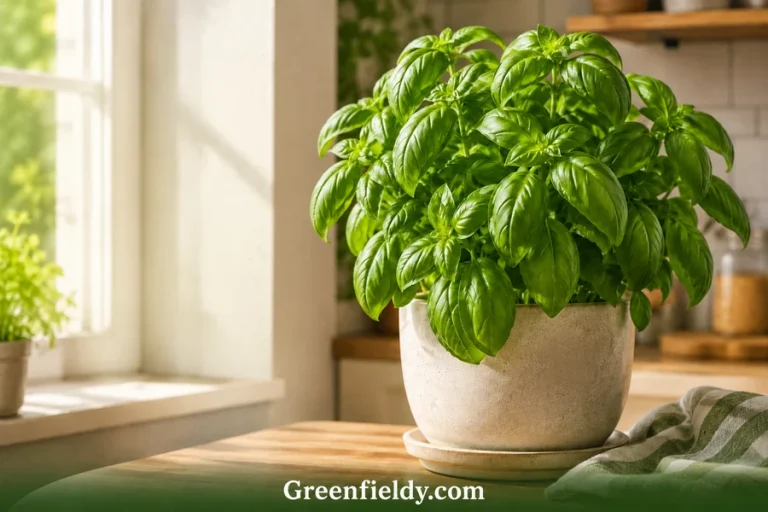
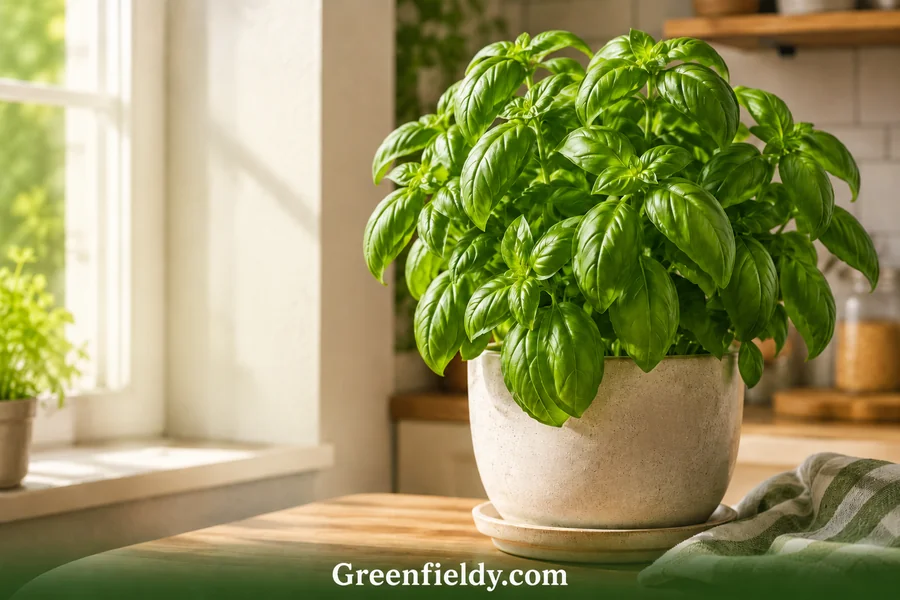
It’s easy to think that it’s simple to purchase an indoor basil plant. It is full and green on the shelf. You take it home, place it on the windowsill and after a week half of the leaves turn yellow and the rest drop off. If it happens to you, it’s not your fault. Grocery store basil is typically a tight cluster of seedlings in a small pot, & those roots weren’t designed to last that long.
It explains how to keep basil alive in the house; how much light it requires, how not to over water & the little things you can do to change one sad head into a continuous harvest of leaves.
Quick Answer: What Does an Indoor Basil Plant Need?
An indoor basil plant needs around 6 hours of direct light a day, soil that drains well & water only once the top inch of soil dries out. Store in a warm location out of the cold, pinch back the top growth to keep it from getting tall and leggy.
So this is the very minimum. The remainder of this guide explains the importance of each piece and common pitfalls.
Read Also: How to Propagate Spider Plants
Why Your Indoor Basil Plant Keeps Dying
Before jumping into fixes, it helps to know what’s actually happening under the surface. Most basil problems trace back to one of these.
| Problem | What’s Really Happening | Fix |
| Yellow leaves | Overwatering or poor drainage | Let the soil dry out between waterings |
| Leggy, thin stems | Not enough light | Move it to a south-facing window or add a grow light |
| Wilting even though soil is wet | Root rot | Repot into fresh, well-draining soil |
| Black spots on leaves | Cold drafts or fungal trouble | Keep it away from windows overnight |
| Barely growing | Overcrowded starter pot | Split seedlings into their own pots |
Almost every issue on this list comes down to light or water. Once those two are dialed in, basil pretty much takes care of the rest.
Light Matters More Than People Think
It’s important to know that basil is a plant of warm, sunny places, and is not suited for a cool, dark corner in the kitchen.
Typically, a window that faces south or west is best. If available, aim for 6-8 hours of direct light per day. If your location just doesn’t get that level of sun, a low-quality LED grow light will work just as well. Then turn the pot every few days or it will begin to lean over toward the nearest light source.
Basil is telling you it needs more light if the stems are stretched out with large gaps between leaves and the colour fades. When you know the symptoms, it’s not elusive.
Watering: Less Is More
This is where most people make a mistake in killing their plant. Basil does not tolerate soil that is waterlogged or too dry. What it desires is consistency, not a schedule.
The best way to determine: plunge a finger into the soil. Top inch dry? Water it. Still damp? Wait another day.
Here are a couple of tips that make it easy along the way. Water at the base and not on the foliage. Check whether there are any holes in the pot as otherwise the water will collect at the bottom and the roots will begin to rot. Watering in the morning is better, as the plant gets to absorb it before it gets cooler at night.
The Right Soil and Pot Setup
Basil has space requirements and it requires air. No matter how good the lighting is, a pot that is too small or is planted too full will stunt the growth of the plant.
Choose a potting pot that has at least 6 inches of drainage holes and a soil that has been formulated for herb or vegetable potting rather than a random bag of soil. A thin layer of gravel or perlite at the bottom will further aid in drainage.
Avoid one thing – garden soil from outside. It is typically too compact to fit in a container, and may introduce pests into the garden.
Temperature and Humidity
It is best kept at temperatures in the range of 65°F to 75°F. It will be stressed out quickly by cool drafts, particularly during the winter, near a window, and the edge of the leaves will turn black.
Humidity is also a factor. Basil is not a fan of dry air, which often occurs when the heating is on in the house. A few times a week a light misting or a little water in a tray out of the way can make a difference.
Feeding Your Indoor Basil Plant
Basil will not require much feeding but it will require some inside, as it can get additional nutrients from the soil without it.
Once every 3-4 weeks is sufficient with a balanced liquid fertilizer. Dilute it to ½ strength to see that it does not burn the roots and start feeding after the first couple weeks after repotting when the roots are established.
Pruning: The Secret to a Bushier Plant
This is the bit that many miss out. If you don’t tend to basil, it will grow tall and narrow and will bloom. After blooming, the leaves become bitter and the growth rate decreases significantly.
Every other few weeks, pinch out the top 2 or 3 leaves, cutting just above a leaf node from where 2 smaller leaves are emerging. If any flower buds appear, prune them off immediately.
This one simple trick can almost double the yield of basil from each plant throughout its life.
Read Also: Garden Cover for Winter
Common Indoor Basil Varieties Worth Growing
| Variety | Flavor Profile | Best For |
| Genovese | Classic, sweet | Pesto, pasta |
| Thai Basil | Spicy, anise-like | Stir-fries, curries |
| Lemon Basil | Citrusy | Teas, salads |
| Purple Basil | Mild, slightly peppery | Garnish, visual appeal |
| Greek Basil | Compact, dense leaves | Small pots, windowsills |
Genovese is the one most home cooks reach for first. It’s easy to find and grows reliably indoors.
Final Words
An indoor basil plant isn’t complicated once you know what it’s asking for: solid light, careful watering & regular pruning. Follow the setup above and you’ll be picking fresh leaves for months instead of watching another plant fade out in a few weeks. Start with one pot, get the routine down, and go from there.
FAQs:
How long does an indoor basil plant live?
With the right light and care, an indoor basil plant can last 4 to 6 months or longer. Regular pruning and stopping it from flowering both help stretch its life.
Why is my indoor basil plant wilting even though I water it?
Wilting despite regular watering usually means root rot from too much water or a pot with no drainage. Check the roots, and repot into fresh, well-draining soil if they look brown or mushy.
Can basil grow indoors without sunlight?
Not really on its own, but a grow light can stand in for natural sun completely. Aim for 10 to 12 hours under an LED grow light if your space gets little to no direct sunlight.
How often should I water an indoor basil plant?
Water once the top inch of soil feels dry, which usually lands around every 2 to 3 days. Skip the fixed schedule and just check the soil each time.
Why does my indoor basil plant smell weak?
A weak scent usually means it’s not getting enough light. The aroma comes from oils that build up more when the plant gets bright, direct sun.
Read Also: How Many Spider Plants Per Pot
About the Author