
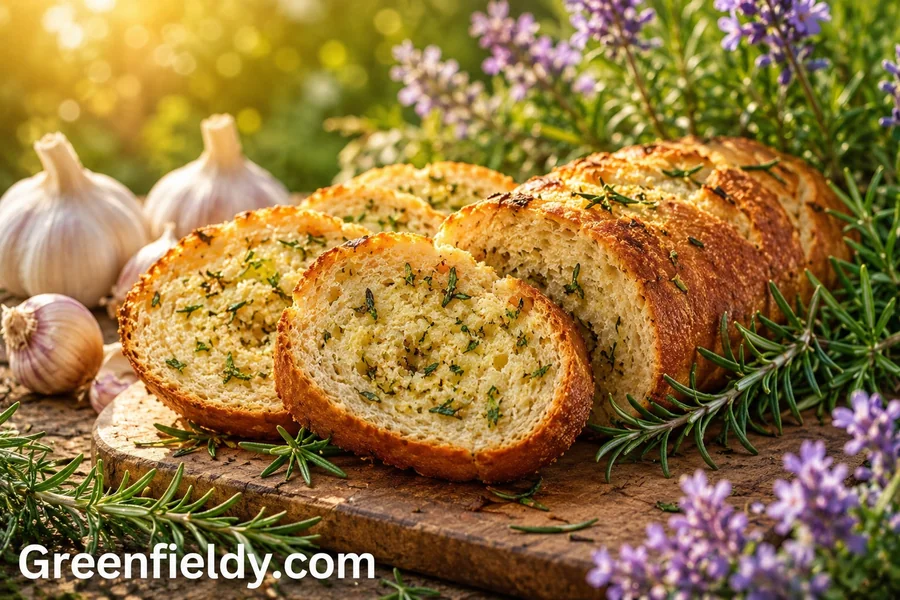
There’s a moment when rosemary garlic pull apart bread comes out of the oven — that smell hits the kitchen — and suddenly nobody is waiting for dinner anymore.They’re at the counter, cutting off bits before it cools down. This isn’t a coincidence. The secret of Rosemary garlic bread is that it’s more than the sum of its parts; garlic and rosemary work together. The sharpness softens, the earthiness sharpens and the bread becomes the memory of the meal.
This guide will include all components: ingredients, method, what goes wrong and how to fix it.
What Rosemary Garlic Bread Actually Is
It’s been eaten by most people. Less people understand what it’s actually.
Rosemary garlic bread is a simple, savory yeast loaf with the essentials of olive oil and the pairing of rosemary and garlic. It may be shaped in various ways: a bread loaf, a flat focaccia-like loaf or a pull apart loaf filled with garlic butter.
This is not just a typical garlic bread with the same bread, however, because the dough is different. This is not a baguette you slice open and butter! The rosemary and garlic are added to the bread and then added to it. The taste is in the entire bite.
Ingredients for Rosemary Garlic Bread
Nothing here is hard to find. This is the base recipe — the one that works every time.
| Ingredient | Amount | Notes |
| Bread flour (or all-purpose) | 3 cups | Bread flour gives more chew. Either works. |
| Active dry yeast | 2¼ tsp | Check the expiry date before you open it |
| Warm water | 1 cup | Around 110°F — warm to the wrist |
| Olive oil | 3 tbsp | Extra virgin. It matters here. |
| Salt | 1½ tsp | Kosher salt or fine sea salt |
| Fresh rosemary | 2 tbsp, chopped | Use dried at half the amount |
| Garlic cloves | 4–6 cloves | Roasted = mellow. Raw = sharp. |
| Honey or sugar | 1 tsp | Feeds the yeast — you won’t taste it |
Simple list. The quality of the olive oil and the freshness of the rosemary make more of a difference than most people expect.
Read Also: Cherry Season in Florida
How to Make Rosemary Garlic Bread
Step 1 — Wake Up the Yeast
Pour warm water into a bowl. Add the yeast and honey. Stir gently and leave it for 5–10 minutes. It should go foamy and slightly puffy. If it stays flat, the yeast is dead. Don’t try to save it — start over with a fresh packet. This step is the foundation. Everything else depends on it.
Step 2 — Build the Dough
Add the flour, salt, olive oil, chopped rosemary, and minced garlic to the yeast bowl. Mix until it comes together into a rough, shaggy mass. It won’t look pretty yet. That’s fine.
Step 3 — Knead
Turn it out onto a lightly floured surface. Knead for 8–10 minutes until the dough is smooth, slightly tacky, and elastic. It should spring back when you poke it. If you have a stand mixer, 6 minutes on medium with the dough hook gets you there.
Step 4 — First Rise
Shape the dough into a ball and place it in a lightly oiled bowl. Cover it with a clean damp towel or plastic wrap. Leave it somewhere warm for 1 to 1.5 hours. It needs to double in size. Don’t rush this.
Step 5 — Shape It
Punch the dough down gently. Now decide what shape you’re making. Round loaf for a rustic look. Rectangle for a pan loaf. Flat sheet for focaccia-style rosemary garlic no knead bread.
Step 6 — Second Rise
Let the shaped dough rest, covered, for another 30–45 minutes. This second rise is what separates airy bread from dense, heavy bread. Don’t skip it.
Step 7 — Top and Bake
Brush the surface with olive oil. Press small rosemary sprigs and thin garlic slices into the top. If baking a loaf, score the surface with a sharp knife — this controls where it expands. Bake at 400°F (200°C) for 22–28 minutes. The crust should be deep golden. Tap the bottom — a hollow sound means it’s done.
Four Versions of Rosemary Garlic Bread Worth Knowing
Depending on how you shape and finish the same basic recipe can take many different forms.
Focaccia-style — flatten dough in a sheet pan. Squeeze the surface with your fingers in every place. Pour in olive oil liberally, filling the dimples. Sprinkle it with rosemary and garlic. Bake until crispy edges & golden on top. This version is softer and oilier — it’s meant to dip.
Score in Crosshatch — Make a round loaf with a crosshatch, but not cut across entirely. Fill with garlic butter and rosemary. Wrap in foil and bake. Unwrap foils toward the end of the cooking time (10 minutes). All join in and take from it. Good for a crowd.
Cheese — Incorporate shredded parmesan or gruyère into the dough, or top with it before baking. The cheese crumbles in the pan. What is best about it is that.
No-knead — Mix all the night before. Allow to sit at room temperature for 12–18 hours. Bake in a Dutch oven at 450°F for 30 minutes on and 15 minutes off. The outcome is a crackly-type crust with no real effort at all and a bakery style look!
Read Also: Do Deer Eat Vinca?
Mistakes People Make With Rosemary Garlic Bread
These show up more often than they should.
Garlic that burns on top. Raw garlic slices directly on the surface of a hot loaf will turn bitter and black before the bread is done. Use roasted garlic on top, or keep raw garlic folded into the dough instead.
Too much rosemary. Fresh rosemary is strong. Two tablespoons is enough. Past that, the bread starts tasting like a medicine cabinet.
Not enough rise time. Rushing the first rise gives you flat, dense bread with no interior structure. Give the dough the full time it needs — the texture you get is worth the wait.
Skipping the salt. Salt does two things: it controls how fast the yeast works, and it makes everything taste like itself. Cutting it wrecks both.
Water that’s too hot. Boiling water kills yeast instantly. The target is around 110°F — warm against the inside of your wrist, not scalding.
Nutrition Breakdown (Per Slice, Approximate)
| Nutrient | Amount |
| Calories | 180–210 kcal |
| Carbohydrates | 28–32g |
| Protein | 5g |
| Fat | 6–8g |
| Fiber | 1–2g |
Values shift depending on how much olive oil you use on top and whether you add cheese. Focaccia-style versions run higher in fat because of the generous oil.
What to Eat With Rustic Rosemary Garlic Bread
It’s flexible. Here’s where it actually earns its place on the table:
Alongside tomato-based pasta — the bread soaks up what’s left in the bowl. Next to a bowl of minestrone, roasted tomato soup, or French onion soup. With grilled meats and roasted vegetables. On a cheese board before the main course. Or by itself with good olive oil and a pinch of flaky salt.
It also freezes well. Slice the bread after it cools completely. Freeze in a zip bag. Reheat individual slices at 350°F for about 10 minutes.
Read Also: Can Goats Eat Peaches?
How to Store Rosemary Garlic Bread
Room temperature — wrap in a paper bag or clean cloth. Lasts about two days. Don’t use plastic wrap; it traps moisture and turns the crust soft.
Refrigerator — not the best option. Cold air dries bread out faster than room temperature does. Only refrigerate if your kitchen is warm and humid.
Freezer — the right call for leftovers. Wrap tightly in plastic, then in foil. Keeps for up to three months. Reheat from frozen or thawed.
One Last Thing
Rosemary garlic bread has a short ingredient list and a straightforward method. What trips most people up is patience — the rise, the rest time, not rushing the garlic on top. Get those right and the bread takes care of itself.
Make it once and you’ll have the recipe memorized by the second time.
FAQs:
Q: Can I use dried rosemary instead of fresh?
Yes. Use about half the amount — 1 tablespoon of dried for every 2 tablespoons fresh. Dried rosemary concentrates as it dries, so less is needed to get the same level of flavor.
Q: Why is my rosemary garlic bread too dense?
Usually one of three things: the yeast didn’t activate properly, the dough didn’t rise long enough, or it wasn’t kneaded enough to develop structure. Check the yeast first — if it doesn’t foam, replace it.
Q: Can I make rosemary garlic bread without yeast?
You can. Replace yeast with baking powder and skip the rise. The texture will be closer to a biscuit or soda bread than a traditional loaf — still good, but a different result.
Q: What flour works best?
Bread flour gives a chewier, more structured crumb. All-purpose flour is perfectly fine if that’s what you have. Avoid cake flour — it’s too low in protein to hold the dough structure together.
Q: Can I add cheese to rosemary garlic bread?
Yes — parmesan, gruyère, and mozzarella are the most common choices. Mix into the dough before the first rise, or press onto the surface just before baking.
Q: How do I get a crispy crust?
Bake at a higher temperature — 400–450°F. Place a small oven-safe pan of hot water on the rack below the bread when you first put it in. The steam keeps the surface soft during the first 10 minutes while the inside sets, then the heat crisps the crust as the steam dissipates.
Q: Is rosemary garlic bread the same as focaccia?
Not exactly. Focaccia is one specific form — flat, oily, dimpled, and baked in a sheet pan. Rosemary garlic bread can be made focaccia-style, but it also comes as a loaf, a pull-apart, or a flatbread. Focaccia is a version of it, not the whole thing.
About the Author