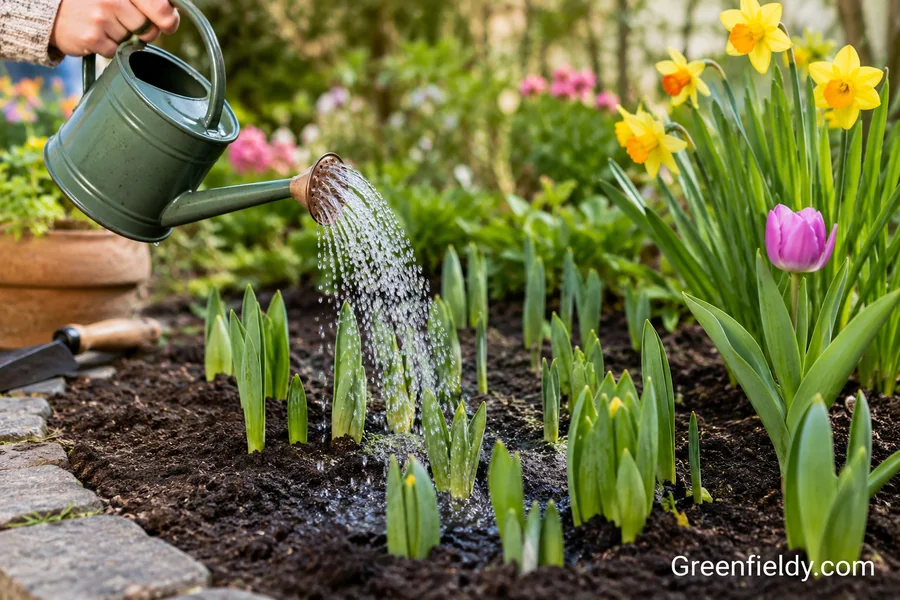
Watering bulbs involves giving the correct watering time and depth to flower bulbs such as tulips, daffodils, and lilies. After planting and as they grow, most bulbs require deep watering and watering regularly; during dormancy they should not be watered at all to prevent rotting and ensure good flowering.
One of the most crucial of the bulbs’ cultivation practices is correct watering. Whatever you grow, tulips, daffodils, lilies, or hyacinths, the water treatment you apply will determine the growth of the plants.
Excessive water may cause the bulbs to rot. They may fail to bloom if they don’t receive sufficient water. It’s a balance that is easy to establish but crucial.
You will learn all about watering bulbs in a hands-on manner from this guide. It includes information about timing, depth, errors, seasonality, and effective techniques that are applicable to both novice and home gardeners.
For enhanced flowering and more vigorous plants, it is essential to know how to water bulbs.
Quick Fact Table: Watering Bulbs Basics
| Factor | Recommendation |
| First watering | Deep watering right after planting |
| Soil moisture | Slightly moist, never soggy |
| Watering depth | 6–8 inches for most bulbs |
| Active growth watering | 1–2 times per week |
| Dormant season | Minimal or no watering |
| Best water type | Clean, room-temperature water |
| Soil type | Well-draining soil preferred |
Understanding Watering Bulbs and Why It Matters
Watering bulbs is more than just a matter of water. It is related to the control of moisture around the belowground storage organ of the plant.
Bulbs store energy. With this energy they create leaves and flowers. Water is an activator of this growth process.
Bulbs are sensitive, though. They can rot if left in water for too long. They can be dormant if they are totally dry.
That is why it is important to balance stuff.
The importance of good watering:
- Helps root development
- Supports strong flowering
- Prevents bulb rot
- Long-term health of plants is improved.
The quality of the flowers and the length of their lifespan are greatly determined by good watering practices.
How Watering Bulbs Respond
Although there are variations in the way different bulbs react to water, they all do it in a similar way.
Bulbs are dormant when planted. They begin to grow when they get moist.
Key stages:
- Stage of dormancy: Desires little watering
- Root formation stage: Moisture needed for consistency
- Mature stage: Tolerant of the stress of drought
- Watering stage: Flowering
- Post-flowering stage: Decreasing water.
- Watering will vary according to each stage.
Step-by-Step Guide to Watering Bulbs Correctly
Step 1: Water Immediately After Planting
After planting bulbs in soil, give them a deep watering. This helps settle the soil and activates root growth.
Do not flood the area. Just ensure the soil is evenly moist.
Step 2: Maintain Light Moisture During Early Growth
Once shoots start appearing, keep the soil slightly moist. Water once or twice a week depending on weather conditions.
Step 3: Avoid Overwatering
Never allow water to pool around the bulbs. This can lead to rot and fungal problems.
Step 4: Reduce Water After Flowering
When flowers fade, reduce watering gradually. The bulb is storing energy for the next cycle.
Step 5: Stop Watering During Dormancy
Once leaves dry out completely, stop watering. The bulb should remain dry until the next growing season.
Read More: How to Protect Houseplants from Cats
Best Watering Schedule for Bulbs
| Growth Stage | Watering Frequency | Notes |
| After planting | Once deeply | Helps root setup |
| Sprouting stage | 1–2 times weekly | Keep soil moist |
| Flowering stage | 2 times weekly | Consistent hydration needed |
| After bloom | Once weekly | Reduce gradually |
| Dormancy | No watering | Prevent rot |
This schedule can vary depending on rainfall and soil type.
Common Mistakes in Watering Bulbs
A lot of gardeners have difficulty keeping their bulbs healthy due to simple watering errors.
- Overwatering
This is the most frequent problem. Bulbs kept in damp earth will soon rot.
- Poor Drainage
Watering, even if correct, can have no positive effect if the soil has poor drainage.
- Irregular Watering
Bulbs may become stressed due to sudden dry and wet periods.
- Watering Dormant Bulbs
Water should not be given to dormant bulbs.
- Shallow Watering
Water should be deeper in the soil where the bulb roots are located.
If you can steer clear of these pitfalls, you’ll have a much better chance of success.
Indoor vs Outdoor Watering Bulbs Comparison
| Factor | Indoor Bulbs | Outdoor Bulbs |
| Water frequency | More controlled | Depends on rain |
| Drainage needs | Very important | Naturally better |
| Risk of rot | Higher | Moderate |
| Soil control | Easy to manage | Weather-dependent |
| Maintenance | Regular monitoring | Less frequent |
Indoor bulbs require more attention because containers hold moisture longer.
Outdoor bulbs benefit from natural drainage and airflow.
Best Practices for Healthy Watering Bulbs
Bulbs will be healthier and stronger with good watering practice.
Key tips:
- Use well-draining soil
- Water at the beginning of the day
- Do not overwater leaves
- Don’t water if the soil is moist.
- Mulching to maintain optimum moisture levels
- Water according to seasons.
Simple practices that can yield great results in flowering.
Read More: Hardening Off Plants
Seasonal Guide to Watering Bulbs
Spring
This is the active growing season. Water in regularly, but not so as to soak the soil.
Summer
A lot of bulbs experience dormancy. Reduce watering significantly.
Autumn
Time for planting several bulbs. Over water, well-established.
Winter
Water only if soil becomes very dry. Most bulbs require little water.
For long-term success, seasonal adjustment is a must.
Soil and Drainage Role in Watering Bulbs
Watering directly impacts the quality of the soil.
Ideal soil conditions:
- Loose texture
- Good drainage
- Slight organic content
- Prominently visible are no water retention pockets.
Too much water will inhibit bulbs, regardless of watering practices.
The addition of sand or compost can greatly enhance drainage.
Advanced Tips for Better Bulb Growth
Use deep planting method
Plant bulbs at a proper depth to reduce moisture stress.
Add mulch layer
Helps regulate soil moisture.
Check moisture with finger test
If top 2 inches are dry, watering is needed.
Avoid hard water
If possible, use filtered or rainwater.
Rotate planting spots
Prevents soil fatigue and disease buildup.
Why Timing Matters in Watering Bulbs
Quality is not the only thing that matters; timing is just as important as well.
In the morning, watering is best because
- Reduces evaporation loss
- Prevents fungal growth
- Promoting plants to take up water efficiently
In humid climates, evening watering is less desirable because it will keep the water on the ground throughout the night.
Troubleshooting Common Bulb Watering Problems
Yellow leaves
Usually caused by overwatering or poor drainage.
No flowering
Can result from inconsistent watering patterns.
Soft bulbs
Sign of rot due to excess moisture.
Slow growth
Often linked to underwatering or dry soil.
Correcting watering habits usually fixes most issues.
Read More: The Real Reason Rosemary Garlic Bread Beats Every Other Bread on the Table
Final Thoughts
Proper bulb watering is the key to proper flower production. It’s not giving more water, it’s about providing the right amount of water at the right time.
If you know the proper amount of moisture and drainage, your bulbs will become stronger and more productive.
Good watering bulb habits are deep initial watering, regular moisture throughout growth and less water during dormancy. A well-maintained garden can be healthy and vibrant throughout the seasons with the proper care.
FAQs
When should watering bulbs be watered after planting?
Water thoroughly after planting and then lightly once or twice a week.
Do bulbs die from overwatering?
Yes. Bulb rotting is one of the most common problems caused by excessive watering.
Should bulbs be watered during their dormancy?
Bulbs should be very lightly watered or not watered at all if they are dormant.
At what time of day is the best time to water bulbs?
The optimum time for effective absorption is the morning.
Do I need to water the bulbs in pots in a different way?
Yes. Potted bulbs require more frequent monitoring because they either tend to dry out the soil or hold the moisture in the soil.
How to tell if bulbs are being overwatered?
Symptoms include yellow leaves, soft bulbs, and mold.
Will rain take the place of watering bulbs?
Yes, but it depends on the rainfall and how well the soil drains.
Which is the best soil for watering bulbs?
It prefers a well-drained, sandy or loamy soil.
About the Author