You buy one. You placed it on a shelf. After two weeks leaves may be drooping, yellow, or simply…doing something weird. Sound familiar?
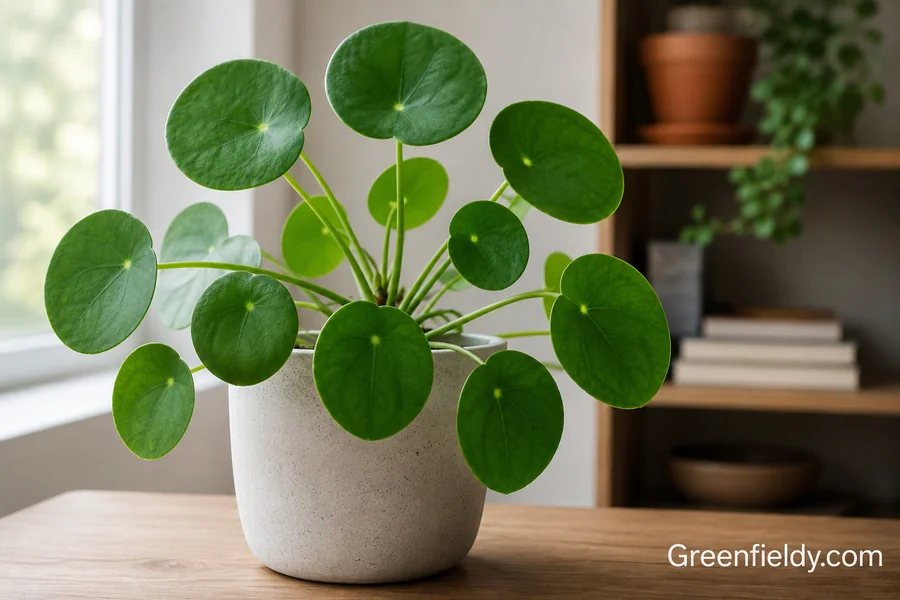
Pilea peperomioides Care is grossly over-simplified all the time. They claim low maintenance, they say. That’s mostly true, but it isn’t true when it isn’t! Truthfully, this plant is constantly talking. With the knowledge that you’re putting yourself in bed with, you’ll find it easy to keep it healthy in no time.
This guide talks about everything: Light, water, soil, propagation, pests and this one thing that gets people all the time.
What Is Pilea Peperomioides?
It is commonly referred to as the Chinese money plant, the UFO plant or the pancake plant. It came to Europe by a missionary from the Himalayan mountains, and, for years, you simply couldn’t buy one. It was necessary for you to be gifted one. This is the origin of its nickname “friendship plant.
It’s not a succulent although it looks like one. The leaves of the Pilea are fleshy, similar to a succulent, but it has very different requirements — don’t confuse it with one! Many of these plants are lost due to this one thing.
Pilea Peperomioides Care Guide: Quick-Reference Table
| Care Factor | What It Needs |
| Light | Bright, indirect — no direct afternoon sun |
| Watering | When top 1–2 inches of soil are dry |
| Soil | Well-draining mix + perlite |
| Temperature | 60–80°F (16–27°C) — stable, no drafts |
| Humidity | Average indoor — no misting needed |
| Fertilizer | Monthly, spring and summer only |
| Repotting | Every 1–2 years, go up one size |
| Toxicity | Non-toxic to pets and humans |
Light: The Most Misunderstood Part of Pilea Peperomioides Care
If you don’t get the light right, there’s nothing else to go wrong.
Pilea peperomioides prefer bright & indirect light for growth. Keep in a bright, indirect light, not in direct sunlight, near a window if possible, and at least 6 hours of bright, indirect light each day.
The leaves get scorched in direct sunlight, particularly in the afternoons. There will be a light area and curling edges. Relocate it or place a sheer between the plant and the glass.
Slow is a problem of too little light. Without adequate light the plant will grow tall, elongated, with fewer leaves that will stretch out toward the light source. In fact for Pilea peperomioides, low light levels may also impede the growth of these characteristic root shoots.
Another thing that people forget to do is turn the plant often, Pilea peperomioides grows much and develops a tendency to turn toward the light. Turn it 1/4 turn week by week and it will grow evenly on all sides.
Read Also: How Many Spider Plants Per Pot
How to Water Pilea Peperomioides Without Killing It
Most Pileas die here. Not because they neglected their duty; they did not neglect their duty, but because they loved too much.
Allow the top inch of soil to dry out between waterings. Pilea peperomioides care may have overwatering as one of the most frequent problems. That in most houses translates to once a week during the summer, and less in the winter.
Monitor for wilted foliage – a possible indication of watering requirements. However, consult the soil moisture prior to watering. Over or underwatering is a cause of drooping. The soil is the true indicator.
If, when you water: do it thoroughly. Fill with water until it runs out the bottom. Then (and this is the part that counts!) pour out any water in the saucer. If the plant remains in standing water, it can get wet feet and suffocate the roots, which can cause root rot.
New addition: Pilea peperomioides is sensitive to fluoride in the tap water and can develop white spots or spotting on leaves. Filtered water, or water stored overnight, is a help.
Symptoms of over watering: yellowing leaves, wet grounds, drooping leaves. In severe cases, the stem becomes mushy.
Symptoms of underwatering: wilting leaves, dry soil and drooped leaves. In severe cases the leaves become curled and edged inwards.
The Right Soil for Growing Pilea Peperomioides
Use an all purpose, dry-draining, indoor potting mix that has perlite or pumice added to it for aeration. Pileas require a light, airy soil that is dry between waterings.
The desired perlite mix is approximately 20-30%. Compacted and very wet soil will have too much water. If water accumulates on the surface rather than soaking into the soil, it’s a good indication that the soil is saturated and in need of replacement.
The pH range of most Pileas is slightly acid to neutral, usually 5.0 – 7.0. It is not a good idea to use dense, heavy garden soil as it tends to compact, holds too much water and has poor aeration.
Fertilizing: Don’t Overdo It
Feed with a balanced liquid fertilizer once or twice a month during the growing season — spring and summer. Reduce or pause fertilizing in fall and winter when growth slows.
Here’s the catch people miss: using too much fertilizer or fertilizing too often leads to mineral build-up, and the plant becomes unable to uptake water properly — which causes drooping.
Half-strength is enough. Once a month is enough. More is not better here.
Temperature and Humidity
Keep your Pilea in temperatures between 60–80°F (16–27°C). Avoid drafty areas, cold windows, or spots near air conditioning units or heaters — sudden temperature changes stress the plant and cause leaf damage.
Humidity? Relax. Normal home humidity is ideal. There’s no need to mist. It copes happily with ordinary indoor air. Misting can actually cause water marks and fungal issues on the leaves — skip it.
Read Also: How to Propagate Spider Plants
How to Propagate Pilea Peperomioides (Step-by-Step)
This is genuinely one of the best parts of owning this plant. It makes its own babies — called pups — right at the base.
During spring and summer you may see new pups sprouting from the soil. These baby plants can be separated and propagated.
Here’s how:
- Wait until the pup is 2–3 inches tall with a few leaves of its own
- Use clean, sharp scissors — cut at the base, keeping some root if possible
- Pot it into a small container with moist, well-draining soil
- Place in bright indirect light and water lightly while it settles
- New growth in 2–4 weeks means it’s taken hold
You can also root stem cuttings in water. Change the water every few days. Once roots hit about an inch long, move it to soil.
Cuttings and pups have spread this plant around the world — earning it the nickname “Friendship Plant.” This plant is genuinely the gift that keeps giving.
Common Pilea Peperomioides Problems (and How to Fix Them)
Yellowing Leaves
Almost always overwatering. Overwatering is the most common issue and causes yellow lower leaves or soft stems. Let the soil dry fully before watering again and make sure your pot has drainage.
Curling Leaves
A common cause of curling leaves is too much sun or heat. While Pilea peperomioides loves plenty of light, it should be indirect or at least filtered by a sheer curtain. Overfertilizing and cold drafts can also cause curling.
Drooping Plant
Check the soil first. Bone dry? Water it now. If the soil is soggy or has poor drainage, overwatering is likely the issue — repot if necessary to inspect roots and refresh the soil.
Leggy, Lopsided Growth
Not enough light, or the plant has been facing one direction too long. Move it to a brighter spot and start rotating it weekly.
Brown Leaf Tips
Brown leaf tips are usually caused by low humidity. A pebble tray with water nearby can help in very dry rooms.
White Crust on Soil or Leaves
Mineral buildup from water — wipe leaves gently with a damp cloth. Consider using filtered or distilled water if buildup continues.
Pests
Spider mites, mealybugs, and fungus gnats are the most common pests. If you spot any, remove them with a cotton swab dipped in rubbing alcohol, or treat with neem oil. Fungus gnats are almost always a sign the soil stays wet too long — let it dry out more between waterings.
Root Rot
If rot is present, cut away any blackened roots, repot into fresh soil, and water very carefully until the plant adapts. Take a stem cutting as backup before you start — just in case.
When and How to Repot
Repot every 1–2 years, or when roots are growing out of the drainage holes, growth has slowed significantly despite good care, or soil has become compacted. Choose a pot 1–2 inches larger in diameter and use fresh, well-draining soil.
Spring is the right time. The plant is waking up and recovers fast. Don’t go up more than one pot size — oversized pots hold moisture the roots can’t use, and that leads straight back to rot.
The Bottom Line
Pilea peperomioides care really does come down to a few habits done consistently. Right light. Careful watering. Soil that drains. That’s most of it.
What makes this plant fun is that it tells you when something’s off. Drooping, curling, yellowing — each one points to something specific. Once you learn to read those signals, you stop guessing.
Get the basics right and the plant takes care of itself. New leaves appear regularly. Pups show up at the base. You start giving them away. That’s the whole cycle — and it’s a good one.
FAQs:
Q: How often should I water Pilea peperomioides?
A: Water when the top 1–2 inches of soil feels dry — roughly once a week in summer, every two weeks in winter. Always check the soil before watering, not the calendar.
Q: Why are my Pilea peperomioides leaves curling?
A: Most likely too much direct sun or heat. Move it to indirect light. Underwatering and cold drafts can also cause curling.
Q: Does Pilea peperomioides need direct sunlight?
A: No. It needs bright, indirect light for at least 6 hours a day. Direct afternoon sun scorches the leaves.
Q: How do I propagate Pilea peperomioides?
A: Remove pups from the base once they’re 2–3 inches tall. Pot them in moist, well-draining soil. Roots establish in 2–4 weeks.
Q: Is Pilea peperomioides toxic to cats or dogs?
A: No. It’s non-toxic to pets and people — a safe choice for most households.
Q: Why are my Pilea peperomioides dropping leaves?
A: Usually overwatering, a temperature shock, or a sudden change in environment. Check the soil moisture and move it away from drafts or vents.
Q: What soil does Pilea peperomioides need?
A: A well-draining indoor potting mix with 20–30% perlite added. Heavy, moisture-retaining soils cause root rot.
Read More Articles: How to Get Rid of Bugs on Indoor Plants
About the Author