
Learning how to grow potatoes is the first step to growing your own food. Potatoes are very productive, simple to cultivate, and can be cultivated in pots or in a garden bed. If the soil is well adapted, watered sufficiently, and patience is exercised, it may be possible to produce potatoes by the pound on a small plot of land.
This book is for all gardeners from novice to expert, from planting onwards to storage.
How to Grow Potatoes
Plants in well-drained soil with certified seed potatoes should be planted. The seed pieces are 4-6″ deep and 12″ apart. Water when young and hill around as plants grow, and remove when dead. The typical potato variety takes 70-120 days to mature.
Potato Growing Facts at a Glance
| Factor | Recommendation |
| Botanical Name | Solanum tuberosum |
| Plant Type | Root vegetable |
| Sunlight | 6–8 hours daily |
| Soil Type | Loose, fertile, well-drained |
| Soil pH | 5.0–6.5 |
| Planting Depth | 4–6 inches |
| Spacing | 12 inches apart |
| Days to Harvest | 70–120 days |
| Water Needs | 1–2 inches weekly |
| Best Seasons | Spring and fall |
Why Grow Potatoes at Home?
Homegrown potatoes offer several advantages and grow your own.
- Fresh flavor and texture
- Lower gardening costs
- Easy to grow for beginners
- High yields from small spaces
- Suitable for containers and raised beds
- Many varieties unavailable in grocery stores
Growing your own potatoes also allows you to control fertilizers and pesticides.

Choosing the Right Potato Variety
The variety you select affects flavor, harvest time, and storage quality.
Early-Season Potatoes
These mature quickly and are ideal for shorter growing seasons.
Examples include:
- Yukon Gold
- Red Norland
- Irish Cobbler
Mid-Season Potatoes
These offer a balance between yield and growing time.
Examples include:
- Kennebec
- Gold Rush
- Viking
Late-Season Potatoes
These take longer but often store better.
Examples include:
- Russet Burbank
- German Butterball
- Elba
Choose varieties based on your climate and intended use.
What You Need Before Planting
Successful potato growing starts with preparation.
Gather:
- Certified seed potatoes
- Compost or aged manure
- Garden fork or shovel
- Mulch
- Water source
- Raised bed or garden space
Avoid using grocery store potatoes because they may carry diseases or have growth inhibitors. Growing potatoes organically when and how to plant, hill, and harvest.
Preparing Seed Potatoes
Large seed potatoes should be cut into smaller pieces.
Each piece should have:
- One or two healthy eyes
- Enough flesh to support sprouting
After cutting, allow pieces to dry for one or two days. This helps form a protective layer and reduces the risk of rot.
Small seed potatoes can often be planted whole.
How to Grow Potatoes Successfully
Growing potatoes is straightforward when you follow a few key steps.
Choose a Sunny Location
Potatoes thrive in full sunlight.
Look for an area that receives:
- At least 6 hours of direct sun
- Good airflow
- Well-draining soil
Avoid locations where potatoes, tomatoes, peppers, or eggplants were recently grown.
Read More: What a Replant Christmas Tree Company Actually Does
Prepare the Soil
Loose soil is essential because potatoes develop underground.
Before planting:
- Remove weeds
- Break up compacted soil
- Mix in compost
- Improve drainage if necessary
Heavy clay soil can reduce yields and cause misshapen tubers.
Plant Seed Potatoes
Dig trenches 4–6 inches deep.
Place seed pieces:
- 12 inches apart
- Eyes facing upward
Leave 2–3 feet between rows.
Cover with soil and water lightly.
Water Consistently
Potatoes need steady moisture.
General guidelines:
- Provide 1–2 inches of water weekly
- Water deeply
- Avoid waterlogged soil
Inconsistent watering can cause cracked or irregular potatoes.
Hill the Plants
As plants grow, mound soil around the stems.
This process is called hilling.
Benefits include:
- Preventing green potatoes
- Increasing yields
- Protecting developing tubers
Continue hilling every few weeks until mounds reach several inches high.
Understanding Potato Growth Stages
Knowing what happens during each stage helps you provide proper care.
Sprouting Stage
Shoots emerge from planted seed potatoes.
This usually occurs within 2–4 weeks.
Vegetative Growth
Plants rapidly develop stems and leaves.
Healthy foliage supports strong tuber formation.
Flowering Stage
Many varieties produce flowers.
At this point, potatoes are actively developing underground.
Tuber Expansion
Potatoes increase in size.
Consistent moisture is especially important now.
Maturity Stage
Leaves begin turning yellow and dying back.
This signals that harvest time is approaching.
Read More: How to Propagate Jade Plant
Common Problems and Solutions
Even easy crops can encounter challenges.
Potato Blight
Symptoms include:
- Dark leaf spots
- Rapid foliage decline
Prevention:
- Improve airflow
- Avoid overhead watering
- Remove infected plants
Colorado Potato Beetles
These insects feed heavily on leaves.
Control methods:
- Hand-picking
- Row covers
- Organic insecticides when needed
Scab Disease
Scab causes rough patches on potato skins.
Reduce risk by:
- Maintaining proper soil pH
- Keeping soil evenly moist
Rotting Tubers
Often caused by poor drainage.
Improve soil structure and avoid overwatering.

Container Growing vs Garden Growing
Many gardeners wonder which method works best.
Comparison of Potato Growing Methods
| Feature | Garden Beds | Containers |
| Space Required | More space | Less space |
| Yield Potential | Higher | Moderate |
| Soil Control | Limited | Excellent |
| Weed Pressure | Higher | Lower |
| Harvesting Ease | Moderate | Easy |
| Mobility | Fixed | Portable |
| Ideal For | Large gardens | Patios and balconies |
Both methods can produce excellent harvests when managed properly.
Growing Potatoes in Containers
Containers are ideal if you have limited space.
Choose a container:
- At least 15–20 gallons
- With drainage holes
- Deep enough for hilling
Fill with quality potting mix and compost.
As plants grow:
- Add more soil
- Maintain moisture
- Feed lightly if needed
Many gardeners use grow bags because harvesting becomes simple.
Fertilizing Potatoes
Potatoes benefit from nutrient-rich soil.
Good options include:
- Compost
- Well-aged manure
- Balanced vegetable fertilizer
Avoid excessive nitrogen.
Too much nitrogen encourages leafy growth instead of potato production.
Apply fertilizer according to soil conditions and plant needs.
Mulching Around Potato Plants
Mulch provides several benefits.
It helps:
- Retain moisture
- Reduce weeds
- Regulate soil temperature
- Protect developing potatoes
Suitable mulch materials include the following:
- Straw
- Shredded leaves
- Grass clippings
Keep mulch a few inches away from stems.
Read More: The Garden Songbird
When to Harvest Potatoes
Harvest timing depends on your goals.
New Potatoes
These are small and tender.
Harvest:
- About 2–3 weeks after flowering
- When plants are still green
Mature Potatoes
For storing potatoes:
- Wait until foliage dies back
- Allow skins to toughen
This improves storage life.
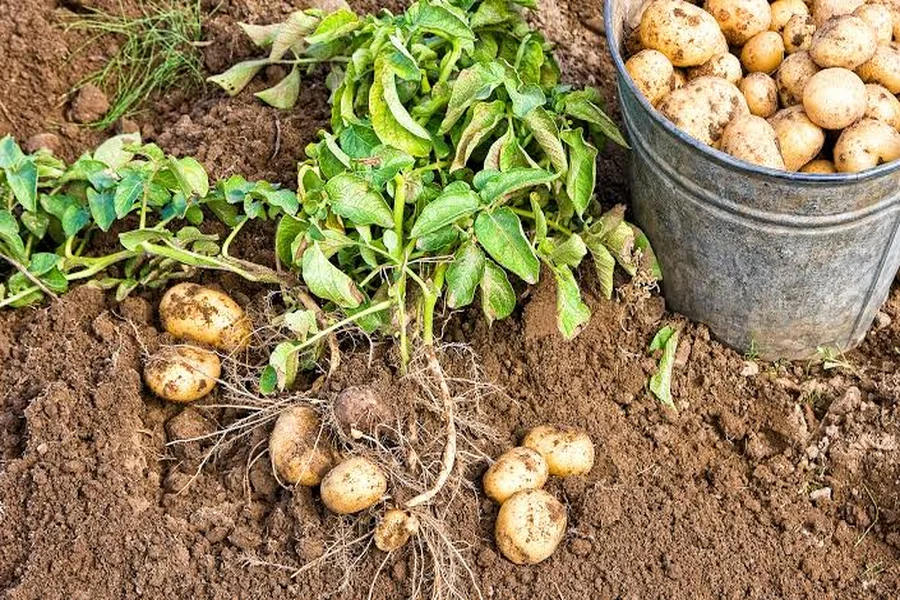
How to Harvest Potatoes
Choose a dry day.
Use a garden fork to loosen soil carefully.
Then:
- Start several inches away from the plant.
- Lift soil gently.
- Collect potatoes by hand.
- Avoid damaging tubers.
Handle potatoes carefully to prevent bruising.
Curing Potatoes for Storage
Freshly harvested potatoes benefit from curing.
Place them in:
- A dark location
- Good ventilation
- Moderate humidity
Allow curing for 1–2 weeks.
This process toughens the skin and improves storage quality.
Storing Potatoes Properly
For long-term storage:
- Keep potatoes cool
- Maintain darkness
- Ensure airflow
- Avoid refrigeration
Ideal storage temperatures range from 45°F to 50°F (7°C to 10°C).
Inspect regularly and remove damaged potatoes. How to grow potatoes is maintained by total temperature.
Read More: How to Protect Houseplants from Cats
Tips for Bigger Potato Harvests
Want better yields? Focus on these practices.
- Use certified seed potatoes
- Plant in loose soil
- Hill regularly
- Water consistently
- Rotate crops annually
- Control pests early
- Provide full sun exposure
- Harvest at the right time
Small improvements often result in significantly larger harvests.
FAQs
How many years does it take to learn the potato civilization?
Depending on the variety and growing conditions, potatoes take 70 to 120 days to mature.
Is it possible to plant potatoes from the supermarket?
It is possible, but certified seed potatoes are a safer choice, as they are not as likely to contain diseases.
How many potatoes will 1 plant grow?
Generally 5–10 potatoes will be produced on a healthy plant, but yields depend on variety and management.
Can potatoes grow in partial shade?
Yes. Potatoes thrive in full sun, which is at least 6–8 hours of direct sunlight per day.
Is it possible for potatoes to be grown in pots?
Yes. Potatoes can be a good crop in containers, grow bags, and large pots.
What’s causing my potatoes to turn green?
Green potatoes are left in the sunlight. This can be avoided by proper hilling and soil coverage.
When to water potatoes?
The majority of gardens require 1-2 inches of water weekly, depending on the rainfall and temperature.
Which soil is ideal for growing potatoes?
The best results are obtained from loose, fertile, well-drained soil with a pH range of 5.0 to 6.5.
How to grow potatoes from a potato?
Potatoes can be grown from either a whole potato that has sprouted or by cutting larger potatoes that have sprouted into chunks. Put them in a loose, good-draining soil and cover with 4 inches of soil, with the sprouts (eyes) up.
About the Author