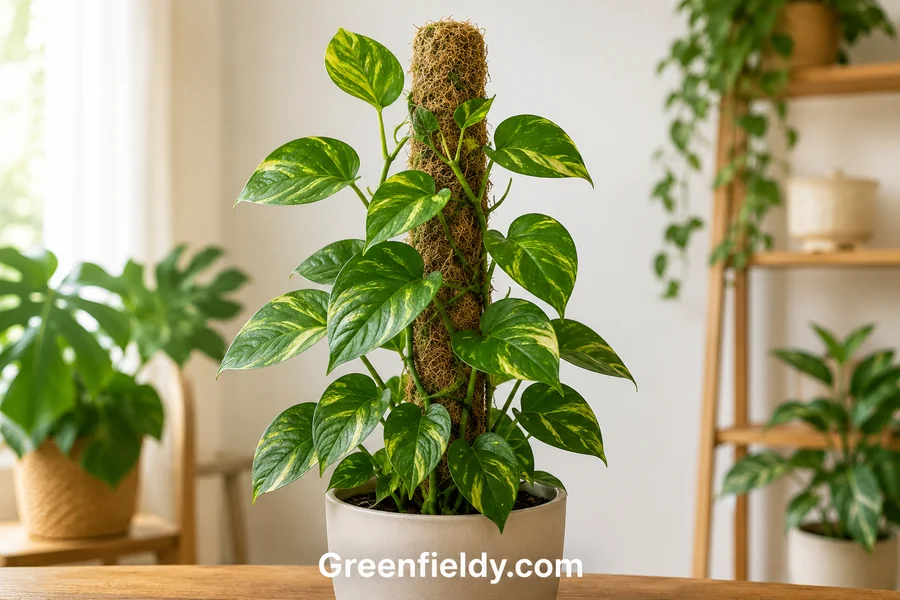
At some point, a trailing pothos begins to look somewhat “lost. The vines grow on a shelf, and the leaves are smaller, with the plant apparently growing sideways and in every direction but upwards. A pothos moss pole provides vines with something to cling to.
Don’t think of this as a magic trick. A pothos moss pole is just a reproduction of the type of support that pothos uses in nature. The stems have the chance to grow up, aerial roots can rest against the pole, and it can grow into a nice, tall, compact form.
A great pothos moss pole can transform a houseplant into a more complete vertical feature. This also allows for easier pruning, watering, and training after the plant begins growth.
This guide explains what a pothos moss pole is, what you need, how to set up a moss pole, and some of the common mistakes people make when setting up a moss pole, and also what the alternatives are if moss is not for you.
What a Pothos Moss Pole Actually Is
A pothos moss pole is the pole used to help a pothos grow upwards in the pot beside the root ball. It is typically filled with a sturdy inner stake and lined with sphagnum moss, coco coir, bark, or mesh.
Pothos naturally grows as a climbing plant. It will droop when unsupported or hang down on nearby furniture. It can still be a handsome look. However, the growth of the plant is altered by climbing.
A pothos moss pole helps the vines to climb and supports the aerial roots. Certain types of pothos will grow stronger stems and larger leaves with training to climb over time.
This doesn’t imply that all pothos require a pothos moss pole. Hanging baskets also make a good choice. The pole is recommended for those who prefer having more height, a more compact form, or a more aged appearance.
Read More: Basil Shortage
What You Need for a Pothos Moss Pole

Nothing here needs to be complicated. Start with a stable pole and a pot that can support it without tipping.
| Item | What to Choose | Why It Matters |
| Moss pole | Moss, coir, or mesh pole with a firm stake | Gives vines a vertical surface to climb |
| Pot | Heavy pot with drainage holes | Helps prevent tipping as the plant grows |
| Potting mix | Loose, well-draining indoor plant mix | Keeps roots from sitting in excess water |
| Soft plant ties | Velcro tape, garden tape, or soft string | Holds vines without cutting into stems |
| Clean scissors | Sharp and disinfected | Useful for pruning weak or damaged growth |
| Watering can | Narrow-spout watering can | Makes it easier to water soil around the pole |
A pothos moss pole should be tall enough to give the plant room to grow but not so tall that it overwhelms a small pot. For a young pothos, a pole around 18 to 24 inches usually works well.
For a larger plant, choose a taller pothos moss pole or one that can be extended later. It is easier to add height before vines become tangled.
How to Set Up a Pothos Moss Pole
If you take your time when installing the pothos moss pole, it is easy to do. The idea is to protect the roots and provide a stable upward support.
Step 1 — Pick the Right Pothos Moss Pole
Select a pothos moss pole for the type of plant and growing space you have. A small plant will not require a large pole. If the pole is too big, it can render the pot unstable and make it more difficult to handle.
Search for a good center stake. Decorative narrowly-spined poles are attractive initially, but when the pothos gets weighty, they will bend.
To use moss poles, you need to make sure that aerial roots touch a slightly moist surface. Coir poles are easier to maintain and are neater in dry homes.
Step 2 — Add the Pothos Moss Pole Before Repotting
The best time to plant a pothos moss pole is when you repot. Carefully take the plant out and see where the main roots are located.
Place the pole near the back or center of the pot. Press it into the bottom to help it hold its shape. Avoid pushing the pole through a heavy root area, as this may cause damage to healthy roots.
Before re-adding soil to a pothos moss pole, it must feel stable. Try to feel it with your hand. If it is moving a great distance, firm soil around it, around the base, will be even more.
Step 3 — Position the Main Vines
Carefully examine the plant before tying. Look for the longest and healthiest vines first. These are the best stems to grow on a pothos moss pole.
Lead each vine up in the direction it wants to grow. Do not bend the stem over sharp edges. Pothos is adaptable but will be stressed out or may snap under forcing.
Do not turn leaves over. If possible, the small aerial root bumps should point towards the pole.
Step 4 — Tie the Pothos Moss Pole Gently
Use soft plant tape, Velcro ties, or loose strips of garden string. Tie the vine to the pothos moss pole every few inches.
Do not tie tightly. A stem requires space to grow thick. It can be easy to end up with a tight tie that leaves marks or tightens the vine.
Here’s a good rule of thumb: You should be able to fit one finger underneath each tie. The vine should not be constrained.
Step 5 — Water the Soil, Not Just the Pothos Moss Pole
Do not use a pothos moss pole to water instead of watering it. The rest of your pothos continues to receive water from the potting mix and primary roots.
Water when the soil surface is dry to the touch. Water gently around the roots until water is dripping out of the bottom of the pot.
If the air in your home is dry, you can spray a moss-covered pothos moss pole lightly with water. Don’t leave it soaking wet. Fungus gnats can be attracted to moss that is constantly wet, or it can be a cluttered pot.
Step 6—Give the Pothos Moss Pole Good Light
With a pothos moss pole, it is best if the plant has adequate lighting for growth. Keep the pothos in bright indirect light close to the window but not in direct sunlight.
Pothos will not die in an instant if they are kept in low light. Can tolerate low light. However, growth can become more retarded, stems can get longer, and variegated leaves may lose some color.
Turn the pot at least once every week or two if more light is received on one side. This can help prevent the pothos moss pole from bending towards the window. covered evenly instead of leaning toward the window.
Step 7 — Train New Growth on the Pothos Moss Pole
Not all new vines will grow to be a vine. Monitor the plant regularly every few weeks and gently direct new shoots to the pothos moss pole.
When a vine begins to pull from the tie, add another loose tie. Eliminate old ties that are too tight or no longer have a function.
Small, frequent changes are best. Not all vines need to be trained up. If you prefer a fuller and less structured appearance, let a few stems hang down.

Four Pothos Moss Pole Styles Worth Knowing
Not every home will benefit from one pothos moss pole. The type of material used will impact the amount of maintenance the plant requires, as well as the appearance of the finished project.
Traditional moss pole—This is the classic option. It is staked in the center and covered with sphagnum moss. A pothos moss pole will retain some water; this can stimulate aerial roots to touch the surface. Must be misted or lightly watered occasionally.
Coco coir pole — A coir moss pole covered with coir. It is neat, very durable, and infrequently needs to be watered. A suitable option for new gardeners or quick gardeners.
DIY mesh pole: This one is filled with moss or coir and has plastic-coated mesh. You can create a DIY pothos moss pole that is larger than a store-bought one, allowing the aerial roots to rest more.
Plank or trellis—a moss-free option will also be suitable. Pothos stems can be trained without using moss by providing direction with a wooden board, bamboo trellis, or support attached to a wall. This is helpful if you don’t want any moisture close to the wall or pot.
Mistakes People Make With a Pothos Moss Pole
These problems are common, but most are easy to fix.
Using a pole that is too loose. A wobbly pothos moss pole makes it harder for vines to stay attached. Push the stake deeper into the pot or use a heavier container.
Tying the stems too tightly. Tight ties can pinch a growing vine. Replace thin wire or stiff string with soft plant tape.
Keeping the moss soaking wet. A wet pothos moss pole is not always better. Moisture can be helpful, but constantly wet material may create mold or attract pests.
Forcing every vine upward. Some stems may be too short, weak, or bent in the wrong direction. Train the strongest vines first and let the others grow naturally.
Ignoring the light level. A pothos moss pole cannot fix poor lighting. If growth is weak, move the plant closer to bright filtered light before expecting bigger leaves.
Using a pot that is too light. A tall pole plus a mature pothos can make a lightweight plastic pot tip over. Use a heavier pot or place decorative stones at the bottom for balance.
Read More: Banana Shortage: Causes, Effects, and What Comes Next
Pothos Moss Pole Comparison: Moss, Coir, Trellis, or Plank?
A pothos moss pole is helpful, but it is not the only climbing support available. This table makes the choice easier.
| Support Type | Best For | Maintenance Level | Main Benefit | Possible Drawback |
| Moss pole | Aerial roots and a natural climbing look | Medium | Can hold gentle moisture | Needs occasional cleaning and misting |
| Coir pole | Easy indoor care | Low | Durable and tidy | Does not hold much moisture |
| Mesh DIY pole | Large plants and custom setups | Medium | Can be extended or made wider | It takes time to build |
| Wooden plank | Minimalist plant displays | Low | Stable and simple | Roots do not grip it as easily |
| Small trellis | Bushier pothos with several vines | Low | Gives multiple climbing directions | May not support heavy mature stems |
The right pothos moss pole depends on your routine. Choose moss if you enjoy hands-on plant care. Choose coir or wood if you want a simple setup that needs less attention.
What to Pair With a Climbing Pothos Moss Pole
While a climbing pothos is a lovely stand-alone plant, a pothos moss pole can also be incorporated into a larger plant arrangement in the interior.
Consider using it with a smaller trailing pothos for contrast. Combine with a snake plant to create a neat vertical arrangement. Another option is to plant a peace lily, ZZ plant, or philodendron in the same light conditions as these plants.
In these locations a pothos moss pole looks particularly good:
- Next to a light-filled window
- Close to the bookshelf with vines visible at eye level
- For a corner that has no furniture in the room, use an empty room corner that needs height.
- In a stand, with a drip tray below.
- Growing as a group of leafy tropical houseplants
Allow some room between pots. Increased air movement will aid in the drying of leaves after watering and in early detection of pests.

How to Maintain a Pothos Moss Pole
Once a pothos moss pole is firm, it requires little maintenance. The important thing is checking it when you normally check your plant.
Check the ties once a month. Take out any tight-fitting ties. Include new ones as the vines begin to grow off the support.
Wipe down leaves to remove dust. Gently wipe off leaves with a damp cloth. Pest problems are easier to see on clean leaves, and they receive better light.
Prune poor and bare plants. When a stem gets long and with few leaves, cut it just above one of the nodes. This can promote more fullness towards the pot.
Replace the pole as necessary. Moss poles can lose their shape over time if they have moss growing on them.This moss-pole-shaped pothos tends to collapse if moss is allowed to grow on it. Replace the outer layer of moss or add more if it begins to disintegrate.
Gradually extend the support. When vines have reached the top, attach another section rather than divide the plant completely. A taller pothos moss pole will allow the pothos to grow without disturbing existing roots.
Final Thoughts
One of the easiest ways to alter the growth pattern and appearance of trailing pothos is by using a pothos moss pole. It provides guidance to the vines and helps make the plant tidier and can make a small pot look more organized.
The worst sin is to set out for instant change. Plants need some time to settle in, expand, and establish new stems. Maintain the pothos moss pole in place, gently tie the vines together, give it bright indirect light, and allow each vine to work itself out into its position.
As soon as there’s new growth that’s going up, the system begins to make sense. Making a pothos moss pole is not hard. It simply provides your plant with more room to grow.
Read More: Is There a Lettuce Shortage? What You Need to Know
FAQs:
Does a pothos moss pole make leaves bigger?
The pothos moss pole will encourage larger growth over time due to the ability for the plant to climb up the pole. Light, watering, nutrients, and plant maturity are still the most important factors.
Pothos moss poles can be kept wet or dry.
If aerial roots need to be laid on a moss pole, keep it lightly moist; otherwise, allow it to dry. Avoid leaving it wet; moisture can cause issues.
Will the pothos grow up a coir pole?
Yes. A coir pole is an excellent alternative to a pothos moss pole. The stems can be tied to it, but coir does not have the water-holding property of moss.
How often do I need to tie pothos on to a pole?
Monitor every 2-4 weeks. Include soft ties for new vines growing away from the pothos moss pole or when vines get heavy and droop.
Is a bamboo stick an alternative to a moss pole?
Yes. Bamboo helps to support the plant, but it is not as textured as a pothos moss pole. Use soft ties to keep vines in place.
Why is my pothos not attaching to the pole?
The vine might require additional time, lighting, or spacing. Direct aerial root nodes towards support and do not force the stem.
May I use a moss pole without repotting?
Yes, but do it with caution. When sliding the pole near the pot edge, rather than through the center of the root ball.
Is a pothos moss pole necessary for healthy growth?
No. Pothos will not thrive as a trailing plant. The pothos moss pole primary function is to support the growth of the vine for fullness and vertical appearance.
About the Author