
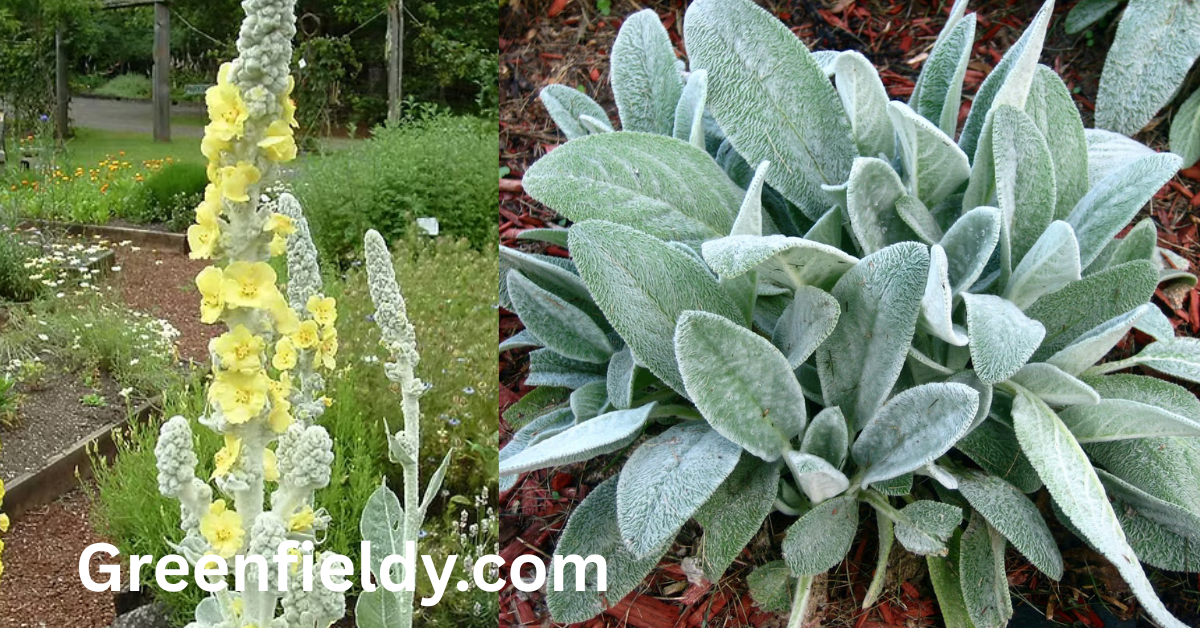
When it comes to unique and beneficial plants, Lamb’s Ear vs Mullein is a comparison that often sparks curiosity among gardeners, herbalists, and plant enthusiasts. At first glance, these two plants may look somewhat similar due to their soft, fuzzy leaves, but they differ significantly in terms of appearance, uses, benefits, and growing conditions. Understanding the differences between Lamb’s Ear and Mullein can help you decide which plant best suits your garden or herbal needs.
In this detailed guide, we’ll explore Lamb’s Ear vs Mullein in depth, covering their characteristics, medicinal uses, care requirements, and much more.
What Is Lamb’s Ear?
Lamb’s Ear (Stachys byzantina) is a low-growing perennial plant known for its velvety, silvery-gray leaves. The plant gets its name because the leaves resemble the soft texture of a lamb’s ear. It is commonly used as an ornamental ground cover in gardens.
Key Features of Lamb’s Ear
- Soft, fuzzy leaves with a silver hue
- Grows low to the ground, spreading easily
- Produces small purple or pink flowers
- Drought-tolerant and hardy
Lamb’s Ear is especially popular in landscaping because of its texture and ability to fill empty spaces beautifully.
What Is Mullein?
Mullein (Verbascum thapsus) is a tall, biennial plant known for its medicinal properties. Unlike Lamb’s Ear, Mullein grows upright and can reach impressive heights, often producing a tall spike of yellow flowers.
Key Features of Mullein
- Tall flowering stalks
- Large, fuzzy green leaves
- Bright yellow flowers
- Widely used in traditional herbal medicine
When discussing Lamb’s Ear vs Mullein, one of the biggest differences lies in their purpose—Mullein is more medicinal, while Lamb’s Ear is mainly ornamental.
Lamb’s Ear vs Mullein: Key Differences
1. Appearance
In the comparison of Lamb’s Ear vs Mullein, appearance is one of the most noticeable differences.
- Lamb’s Ear: Low-growing, spreading plant with soft, silver leaves
- Mullein: Tall, upright plant with green leaves and a flowering spike
Lamb’s Ear creates a carpet-like effect, whereas Mullein stands out as a vertical feature.
2. Growth Habit
Another major factor in Lamb’s Ear vs Mullein is how they grow.
- Lamb’s Ear grows as a ground cover and spreads horizontally
- Mullein grows vertically and can reach up to 6–8 feet
This difference makes Lamb’s Ear ideal for borders, while Mullein works well as a focal point.
3. Uses
The uses of these plants highlight a crucial distinction in Lamb’s Ear vs Mullein.
- Lamb’s Ear Uses:
- Ornamental gardening
- Ground cover
- Occasionally used as a natural bandage due to its softness
- Mullein Uses:
- Herbal remedies (especially for respiratory issues)
- Teas and tinctures
- Anti-inflammatory applications
Mullein has a long history in traditional medicine, making it far more versatile in health-related uses.
4. Medicinal Benefits
When evaluating Lamb’s Ear vs Mullein, medicinal value is a key point.
- Lamb’s Ear has mild antibacterial properties and was historically used for wound dressing.
- Mullein is widely used for:
- Treating coughs
- Soothing sore throats
- Supporting lung health
Clearly, Mullein stands out in terms of medicinal importance.
5. Care Requirements
Understanding care needs is essential in the Lamb’s Ear vs Mullein comparison.
Lamb’s Ear Care
- Prefers well-drained soil
- Thrives in full sun
- Requires minimal watering
Mullein Care
- Grows well in poor soil
- Needs full sunlight
- Extremely drought-resistant
Both plants are low-maintenance, but Mullein is particularly hardy and can grow in harsher conditions.
6. Climate Adaptability
In Lamb’s Ear vs Mullein, both plants are adaptable but differ slightly.
- Lamb’s Ear prefers temperate climates
- Mullein can thrive in a wider range of conditions, including dry and rocky areas
This makes Mullein a better choice for wild or naturalized gardens.
7. Lifespan
Another important aspect of Lamb’s Ear vs Mullein is their lifecycle.
- Lamb’s Ear is a perennial, returning year after year
- Mullein is typically biennial, completing its life cycle in two years
Similarities Between Lamb’s Ear and Mullein
Despite their differences, Lamb’s Ear vs Mullein also reveals some similarities:
- Both have soft, fuzzy leaves
- Both are drought-tolerant
- Both thrive in full sunlight
- Both attract pollinators
These similarities often lead to confusion between the two plants, especially for beginners.
Which Plant Should You Choose?
Choosing between Lamb’s Ear vs Mullein depends on your goals.
- Choose Lamb’s Ear if you want:
- A decorative ground cover
- A soft-textured plant for landscaping
- A low-growing perennial
- Choose Mullein if you want:
- A medicinal herb
- A tall, eye-catching plant
- A hardy, low-maintenance option
FAQs About Lamb’s Ear vs Mullein
1. Are Lamb’s Ear and Mullein the same plant?
No, they are completely different species. While they share a fuzzy texture, Lamb’s Ear vs Mullein shows clear differences in growth, use, and appearance.
2. Can you use Lamb’s Ear like Mullein for medicinal purposes?
Not really. While Lamb’s Ear has minor uses, it does not offer the same extensive medicinal benefits as Mullein in the Lamb’s Ear vs Mullein comparison.
3. Which plant is better for beginners?
Both are beginner-friendly, but Mullein may be easier due to its ability to grow in poor soil and harsh conditions.
4. Do both plants attract pollinators?
Yes, both plants attract bees and other pollinators, making them beneficial for garden ecosystems.
5. Is Mullein invasive?
In some regions, Mullein can spread quickly. When considering Lamb’s Ear vs Mullein, it’s important to monitor Mullein’s growth.
6. Can Lamb’s Ear grow indoors?
It is not ideal for indoor growth, as it prefers outdoor sunlight and airflow.
7. How do you identify Mullein easily?
Look for its tall stalk and yellow flowers—key identifiers in the Lamb’s Ear vs Mullein comparison.
Conclusion
In the debate of Lamb’s Ear vs Mullein, both plants offer unique advantages depending on your needs. Lamb’s Ear stands out as a beautiful, soft-textured ground cover perfect for ornamental gardening. On the other hand, Mullein excels as a powerful medicinal herb with a striking vertical presence.
Understanding the differences between Lamb’s Ear vs Mullein helps you make an informed choice for your garden or herbal practices. Whether you prefer the aesthetic appeal of Lamb’s Ear or the practical benefits of Mullein, both plants bring value and character to any space.
Ultimately, the choice in Lamb’s Ear vs Mullein comes down to purpose—decoration or medicinal use. By knowing what each plant offers, you can enjoy the best of both worlds and even consider growing them together for a diverse and functional garden.
About the Author