
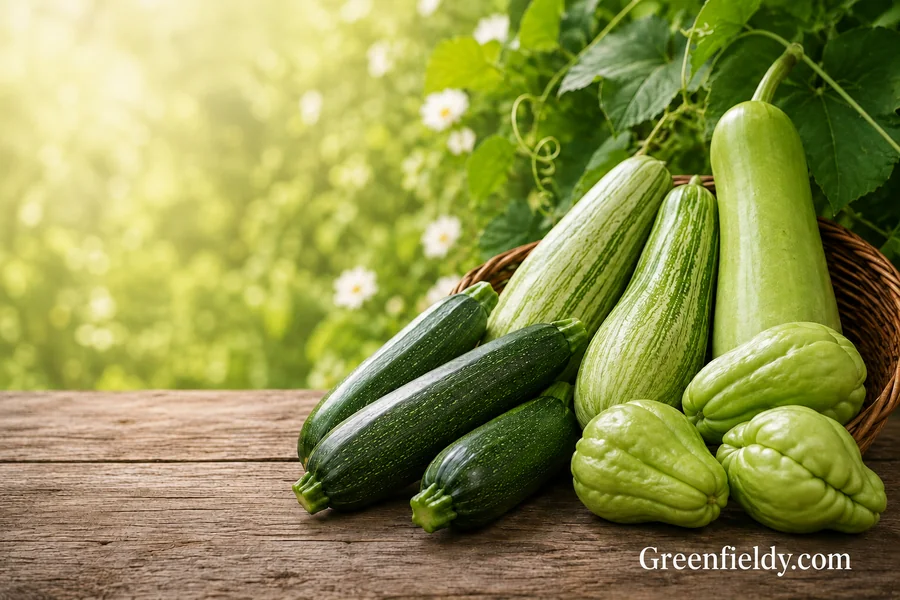
It is picked up in the market. Long, green and just like a cucumber. There’s something amiss, though. There are differences in the skin. Its odor is not quite one that one would want. You’re holding a vegetable that looks like a cucumber but isn’t — and you’re not the first person to be confused.
This occurs more often than you’d imagine. There are multiple vegetables that resemble the appearance of a cucumber. Many are members of the same plant family. Others have nothing to do with it but are also long, skinny, and green. It makes a difference, in the kitchen, in your diet, and, well, if you’re going to the grocery store and you want to not look like a dunce.
Let’s go through them one by one.
What Vegetable That Looks Like a Cucumber But Isn’t?
The most common answer is the zucchini (also called courgette). It is green, long, smooth and looks like a cucumber at first sight. However, zucchini is a summer squash. It’s quite distinctively different in terms of its botany, flavour when raw and completely different when cooked.
Other vegetables that get mistaken for cucumbers include:
- Armenian cucumber (technically a melon)
- Bitter melon (same family, very different taste)
- Chayote (a type of squash)
- Ridge gourd / Luffa
- Snake gourd
- Wax gourd (Winter melon)
Each one looks the part. None of them are cucumbers.
Quick Comparison Table: Cucumber vs. Lookalikes
| Vegetable | Botanical Family | Raw Taste | Best Use |
| Cucumber | Cucurbitaceae | Mild, watery | Salads, pickling |
| Zucchini | Cucurbitaceae | Bland, firm | Cooking, grilling |
| Armenian Cucumber | Cucurbitaceae (melon) | Sweet, mild | Raw eating |
| Bitter Melon | Cucurbitaceae | Very bitter | Stir-fry, curry |
| Chayote | Cucurbitaceae | Neutral, crunchy | Soups, raw |
| Ridge Gourd | Cucurbitaceae | Mild | Curry, sauté |
| Snake Gourd | Cucurbitaceae | Slightly bitter | Cooked dishes |
| Wax Gourd | Cucurbitaceae | Neutral | Soups, stews |
Zucchini: The Most Common Cucumber Lookalike
Zucchini is the vegetable that looks like a cucumber but isn’t — and it wins this title by a wide margin. The confusion is understandable. Both are long, green, and smooth. Both show up in the same section of the produce aisle.
Here’s how to tell them apart fast:
- Skin: Cucumber skin has a slight waxy feel and sometimes small bumps. Zucchini skin is matte and uniform.
- Seeds: Cucumber seeds are visible and surrounded by watery flesh. Zucchini has smaller seeds in denser flesh.
- Raw taste: Cucumber is refreshing and watery. Raw zucchini is bland and almost spongy.
- When cooked: Cucumber goes mushy fast. Zucchini holds its shape and absorbs flavor well.
Nutritionally, they’re both low in calories. But zucchini has more fiber and is higher in vitamins B6 and C. Cucumber is higher in water content — around 95%.
Armenian Cucumber: The One That’s Actually a Melon
This is a big surprise! Also known as yard-long cucumber or snake cucumber, the Armenian cucumber is virtually the same as a cucumber. Long, thin, light green, possibly bent.
But it’s a melon. It is not a cucumber; it is actually botanically of the species Cucumis melo.
Mild and slightly sweeter than cucumber. The skin is thinner and doesn’t need peeling. It’s one of the best cucumber substitutes for raw eating — but it’s technically a vegetable that looks like a cucumber but isn’t.
Read More: Eggplant Shortage
Bitter Melon: Same Family, Completely Different Experience
Bitter melon (Momordica charantia) is characterized by the presence of warts and ridges on its skin. It’s oblong and green — shape would suggest cucumber, but the surface is pretty loud and clear.
Strongly bitter flavour. But it’s not a grudge against the world. Strong impact, long duration. For this reason it is generally only employed in cooked foods, such as stir fries, curries, and soups, where it can be complemented by other more potent flavors.
Bitter melon is used in a variety of South Asian, Southeast Asian and East African dishes. Also, in traditional medicine, it is employed as a way of dealing with blood sugar, but still there is some research going on.
If you’ve seen a green, bumpy vegetable that looks like a cucumber but isn’t — this is probably it.
Chayote: The Underrated Lookalike
Chayote (Sechium edule) is a light green pear-shaped fruit. At a young age and small size it may resemble a short cucumber. The skin is slightly ridged and the flesh firm, white and very mild tasting.
Native to Mesoamerica, and popular in the cuisines of Latin America, India and Asia. Can be eaten raw, pickled, stir fried or added to soups. It absorbs the flavors surrounding it, like tofu.
Chayote has a high folate content and is low in calories. If you see it, add it to your regular rotation!
Ridge Gourd and Snake Gourd: The Ones You See in Asian Markets
These are found at both South Asian and South East Asian grocery stores. They are elongated and green in colour, ridge gourd—defined ridges running lengthwise and snake gourd—long/thin and sometimes coiled.
Both of these are not cucumbers. They’re both a type of gourd known as Cucurbitaceae. They are almost always cooked, and if left raw they’re not very appealing. They cook well in curries and stir-fries, however, and have a nice texture.
Ridge gourd is the cucumber-like vegetable that you’ve seen in Indian or Sri Lankan grocery stores as a long, ridged cucumber.
Wax Gourd (Winter Melon): The Biggest Lookalike of All
The wax gourd (Benincasa hispida) grows to more than 30 lb.Wax gourd (Benincasa hispida) can grow over 30 lb. Small, young wax gourds resemble cucumbers, but have a pale green color with a white waxy layer.
Its flesh is white, mild and has high water content. Mainly used as a flavouring in soups and stews from Asia. It tastes very bland by itself: it absorbs the broth surrounding it.
Winter melon soup is a traditional Chinese recipe. The gourd was hollowed and cut into shape and was used as an eating bowl; the biggest that could ever be achieved with most cucumbers.
Read More: How to Get Rid of Bugs on Indoor Plants
How to Tell a Cucumber Apart From Its Lookalikes (Fast)
Here is a quick list to use in the store:
Examine the skin: The skin on cucumbers is slightly waxy and may be prickly. Zucchini is smooth and matte.
Taste it: Cucumber tastes crisp and refreshing. Zucchini is nearly odorless.
Look at the ends: Cucumber stems are thin. The stems of zucchini are stouter and more noticeable.
Check the weight: Cucumbers weigh their size because of their large water content. Zucchini feels denser.
Check the color: The majority of cucumbers are more vibrant and green. Zucchini is darker in colour.
Why Does This Confusion Happen So Often?
All of these vegetables come from the same plant family and are related to each other, such as cucumber. It’s a big family consisting of cucumbers, squash, melon, gourds and pumpkins. Many of them developed similar shapes since they are growing on vines and elongated shapes are advantageous for them.
The confusion is part and parcel of biology. It’s not your fault.
Final Word
The next time you spot a vegetable that looks like a cucumber but isn’t — now you’ll know exactly what it is. Zucchini, Armenian cucumber, bitter melon, chayote, ridge gourd, snake gourd, wax gourd — each one has a distinct identity, a distinct use, and a distinct place in the kitchen. Don’t let the shape fool you. The differences are real & knowing them makes you a sharper cook and a more confident shopper.
FAQs:
Q: What vegetable looks like a cucumber but isn’t?
A: Zucchini is the most common vegetable that looks like a cucumber but isn’t. It’s a summer squash with similar color and shape but different texture, taste, and cooking behavior. Other lookalikes include Armenian cucumber (a melon), bitter melon, chayote, ridge gourd, snake gourd, and wax gourd.
Q: Is zucchini the same as a cucumber?
A: No. Zucchini and cucumber belong to the same plant family (Cucurbitaceae) but are different species. Zucchini is a squash (Cucurbita pepo). Cucumber is Cucumis sativus. They look alike but taste and cook very differently.
Q: Can you eat cucumber lookalikes raw?
A: It depends on the vegetable. Zucchini and Armenian cucumber can be eaten raw. Bitter melon, ridge gourd, snake gourd, and wax gourd are best cooked. Chayote works both ways.
Q: What is the long green vegetable that looks like a cucumber in Asian markets?
A: It’s likely ridge gourd, snake gourd, or bitter melon. All three are common in South Asian and Southeast Asian produce sections. Ridge gourd has visible ridges along its length. Snake gourd is very long and thin. Bitter melon has a warty, bumpy surface.
Q: What is the difference between Armenian cucumber and regular cucumber?
A: Armenian cucumber is botanically a melon (Cucumis melo), not a true cucumber. It’s milder, slightly sweeter, has thinner skin, and doesn’t need peeling. Regular cucumber has a more neutral taste and firmer skin.
Q: Is bitter melon related to cucumber?
A: Yes — both belong to the Cucurbitaceae family. But bitter melon is a different genus (Momordica). It’s recognizable by its bumpy skin and has an intensely bitter taste unlike any cucumber.
Q: Why do so many vegetables look like cucumbers?
A: Because they’re from the same plant family. Cucurbitaceae plants — including cucumbers, squash, gourds, and melons — share similar vine-growing habits and often produce elongated, green fruits. The shape is an evolutionary pattern, not a coincidence.
Read More: Mustard Field Guide
About the Author




1 thought on “The Vegetable That Looks Like a Cucumber But Isn’t — And Why Most People Confuse Them”