When you dig a plant up out of the soggy soil, you see soft roots sticking to the wet compost. It’s all because the plant might have been just fine days before. This is the place where LECA balls can make a big difference.
While easy to make with clay, LECA balls alter the propagation of water, air and nutrients around the plant’s roots. They are not magic. They will not save all of the struggling plants. However, when properly employed, LECA balls can simplify indoor plant care and minimize mess.
This guide provides an explanation on what LECA balls are, how to use them, what can go wrong, and which plants are most likely to thrive in LECA.
What Are LECA Balls Actually?
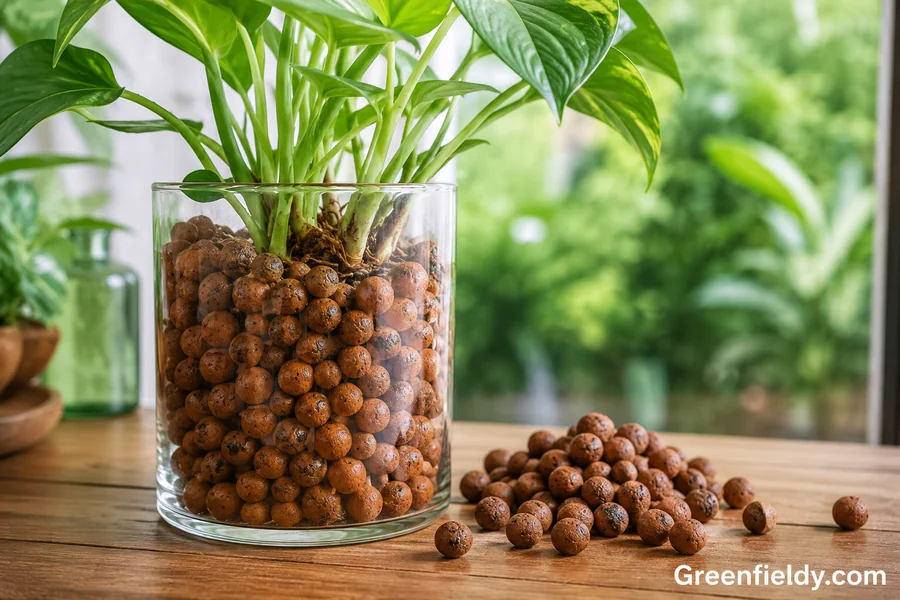
LECA is a lightweight expanded clay aggregate. LECA balls, in everyday terms, are clay pellets that are heated at extremely high temperatures, causing them to expand and become light.
The pellets are hard on the outside but porous on the inside. This porous structure retains water but provides air spaces around the roots.
The LECA balls are not compacting soil like a regular potting soil. They are not easily biodegradable, either. This is beneficial for those who prefer to use a cleaner method to grow houseplants.
Often used for semi-hydroponics are Leca balls. Here, the plant is placed in the clay pellets with the roots exposed to water and fertilizer from below.
LECA Balls Quick Facts
| Feature | What It Means for Your Plant |
| Material | Expanded natural clay |
| Texture | Round, lightweight, porous pellets |
| Main use | Semi-hydroponics, propagation, drainage support |
| Water handling | Holds some moisture without becoming dense soil |
| Airflow | Creates gaps that help roots breathe |
| Reusability | Can be washed, sterilized, and used again |
| Best for | Many tropical houseplants, cuttings, and moisture-sensitive plants |
| Fertilizer need | Requires added nutrients because LECA balls contain almost none |
LECA balls are especially popular with people who grow pothos, monstera, philodendron, syngonium, peace lilies, orchids, and certain hoyas indoors.
What You Need Before Using LECA Balls
You do not need an expensive setup to start. A clear nursery pot, a cover pot, water, nutrients, and clean LECA balls are enough for most beginner setups.
| Item | Why You Need It | Helpful Tip |
| LECA balls | Replaces or supports soil | Rinse them well before use |
| Inner nursery pot | Holds the plant and pellets | Choose one with drainage holes |
| Outer cachepot | Holds the water reservoir | Make sure it does not leak |
| Hydroponic fertilizer | Feeds the plant | Use a balanced formula made for water growth. |
| pH test kit | Helps monitor nutrient water | Useful for long-term semi-hydro setups |
| Clean scissors | Trims damaged roots | Disinfect before cutting |
| Water | Starts the reservoir | Use room-temperature water |
A basic setup is better than an overly complicated one. The most important part is cleaning the LECA balls and keeping the water level low enough that the roots can adapt.
How to Use LECA Balls for Houseplants
Moving a plant from soil to LECA balls takes patience. The plant needs time to grow roots that can handle a different environment.
Do not expect every root from the old soil setup to survive. That is normal. Your goal is to help the plant create new water-friendly roots over time.
Step 1—Rinse the LECA Balls
LECA balls often arrive dusty. Put them in a bucket or colander and rinse them several times until the water looks mostly clear.
This step matters more than people think. Clay dust can make the reservoir dirty and may clog small drainage spaces.
After rinsing, soak the LECA balls in clean water for at least a few hours. Overnight is even better.
Step 2 — Remove the Plant From Soil
Take the plant out of its pot gently. Loosen the root ball with your fingers and remove as much soil as possible.
You do not need to scrub every root until it looks perfect. However, leaving large clumps of soil behind can create problems later.
Soil trapped between roots may stay too wet. It can also introduce pests or fungus into the new LECA balls setup.
Step 3 — Check the Roots Carefully
Look at the roots before placing the plant into LECA balls.
Healthy roots are usually firm. They may be pale, white, tan, or light brown depending on the plant. Roots that feel mushy, hollow, dark, or slimy should be trimmed away with clean scissors.
Do not remove healthy roots just because they look different from hydroponic roots. Focus on texture, not color alone.
Step 4 — Add a Base Layer of LECA Balls
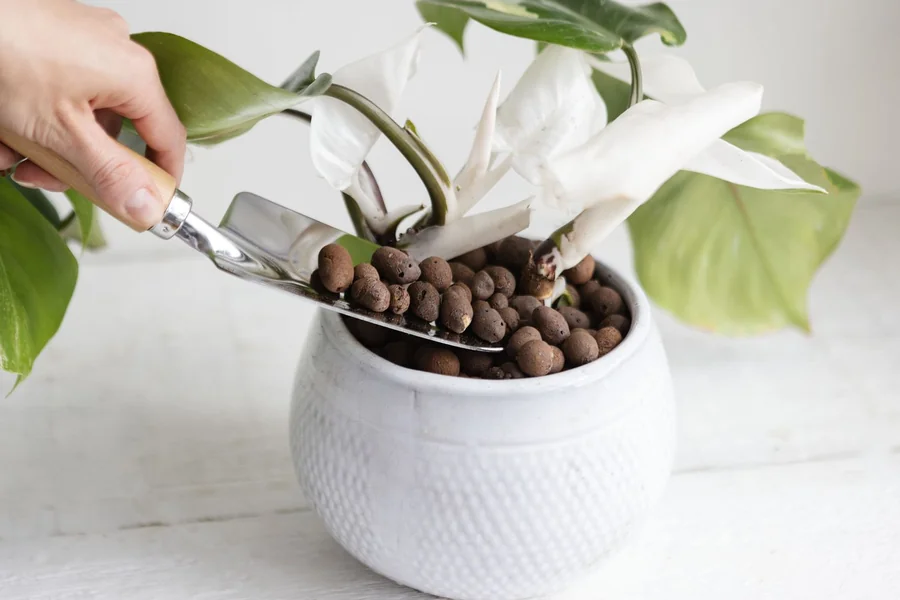
Put a small layer of soaked LECA balls in the bottom of the inner pot.
Place the plant on top and hold it in the position you want. Keep the crown of the plant at a similar height to where it was growing before.
This prevents the plant from sitting too deep in the pot.
Step 5 — Fill Around the Roots With LECA Balls
Add more LECA balls around the roots. Shake the pot gently as you work so the pellets settle into the empty spaces.
Do not pack the LECA balls down tightly. Their air spaces are one of their biggest benefits.
The plant should stand upright, but the root zone should still have room for airflow.
Read More: Okra Shortage Explained
Step 6 — Add Water and Nutrients
Place the inner pot inside the outer pot. Add water to the outer pot so it reaches roughly the bottom quarter or third of the inner pot.
The water should not cover the entire root system. The lower LECA balls absorb water, then move moisture upward through capillary action.
Add a weak hydroponic fertilizer solution rather than plain water for long-term growing. LECA balls do not provide nutrients on their own.
For a newly transferred plant, start gently. A weaker nutrient mix is safer while the plant adjusts.
Step 7—Let the Plant Adapt to LECA Balls
The first few weeks can feel confusing. Some older soil roots may decline. A few yellow leaves may appear. The plant may pause before growing again.
Do not panic too early.
Keep the plant in bright indirect light. Avoid moving it constantly. Watch for new roots and new leaves. Those are the signs that the plant is beginning to accept the LECA balls environment.
Four Ways to Use LECA Balls Worth Knowing
LECA balls can be grown in any manner. They can be utilized in a number of useful ways depending on your plant and comfort level.
Full Semi-Hydro Setup
The most popular application of LECA balls. The plant is wholly placed in clay pellets, and a water tank is located below.
It is suitable for the many tropical plants that like regular moisture but do not like compacted soil.
With a full semi-hydro system, you have greater control over the water and nutrients. It can also help minimize fungus gnats, as the soil is not sodden on the top.
LECA Balls for Propagation
LECA balls can be used to propagate cuttings. Put a node cutting in a small pot containing moist clay pellets and a small water container.
It works well for pothos, heartleaf philodendron, Monstera adansonii, and syngonium cuttings.
The pellets help to maintain a stable cutting and still provide air around the developing roots.
LECA Balls as a Soil Additive
LECA balls can be added to potting soil to help aerate it. Not the same as full semi hydroponics.
You could, for instance, add a little crushed LECA or smaller LECA balls to a dense mix to avoid compaction. In the case of plants requiring supplemental air space around the roots, it can be helpful.
Never use large LECA balls as the sole remedy for heavy soils. It’s still crucial to use a good chunky soil mixture.
LECA Balls for Decorative Top Dressing
Others use balls on top of the LECA to give it a sleeker appearance.
This can help to minimize splash in the soil when watering. It can also help to keep pets from digging in the pot.
But most of the top dressing is ornamental. It’s not a substitute for proper drainage or watering practices.
Read More: Growing Arugula Indoors Year-Round
LECA Balls vs Other Growing Media
LECA balls are useful, but they are not the only option. The best growing medium depends on your plant, your watering habits, and how much maintenance you want.
| Growing Medium | Best Use | Water Retention | Airflow | Nutrient Source | Beginner Difficulty |
| LECA balls | Semi-hydro houseplants | Medium | High | Added fertilizer needed | Moderate |
| Potting soil | Most common houseplants | Medium to high | Medium | Soil nutrients plus fertilizer | Easy |
| Coco coir | Moisture-loving plants | High | Medium | Added fertilizer needed | Moderate |
| Perlite | Soil aeration | Low | High | None | Easy |
| Orchid bark | Epiphytes and chunky mixes | Low | Very high | Added fertilizer needed | Moderate |
| Pon mineral mix | Semi-hydro growing | Medium | High | Often includes nutrients | Moderate |
LECA balls are a good choice when you want less soil mess and more control. Regular soil may be easier when you prefer a simple watering routine and do not want to manage nutrient reservoirs.
Mistakes People Make With LECA Balls
These issues show up often, especially during the first transfer.
Using dry LECA balls straight from the bag. Dry pellets pull moisture away from roots at first. Rinse and soak them before planting.
Keeping too much water in the reservoir. The roots should not be fully submerged. A shallow reservoir is enough for most plants.
Forgetting nutrients. LECA balls are not soil. They do not feed a plant. Long-term growth requires hydroponic nutrients.
Transferring a weak plant too quickly. A stressed plant may struggle with any major change. It is usually better to stabilize severe pest, rot, or light problems first.
Leaving too much old soil around the roots. A small amount may remain, but large soil clumps can stay wet and decay inside the pot.
Using strong fertilizer immediately. Freshly transferred plants need time. Start with a diluted solution and increase slowly once new roots appear.
Ignoring the reservoir. Old water can collect salts, debris, and algae. Empty and refresh it regularly.
Expecting every plant to love LECA balls. Some plants adapt easily. Others prefer a chunky soil mix. Watch the plant instead of forcing the method.
LECA Balls Care Breakdown
| Care Area | What to Do |
| Water reservoir | Refill when nearly empty, not every day |
| Nutrients | Use a diluted hydroponic fertilizer consistently |
| Cleaning | Flush the pot with clean water every few weeks |
| Light | Keep the plant in its normal preferred light level |
| Root checks | Inspect during reservoir changes if the plant seems stressed |
| Algae control | Keep clear containers out of direct sun |
| Reuse | Wash and sterilize LECA balls before using them again |
The biggest habit is flushing. Every few weeks, pour clean water through the LECA balls to remove fertilizer salts.
Salt buildup can make leaf edges brown and may slow growth. A regular flush keeps the root environment fresher.
Read More: Growing Strawberries in Containers
What Plants Work Well With LECA Balls?
LECA balls work best with plants that can adapt to consistent moisture and airy roots.
Good options include:
- Pothos
- Philodendron
- Monstera
- Syngonium
- Peace lily
- Spider plant
- Lucky bamboo
- Many orchids
- Some hoyas
- Alocasia, with careful monitoring
- Herbs grown from water-rooted cuttings
Plants with very fine roots or plants that prefer drying out completely may need more attention. Cacti and many succulents often do better in fast-draining soil unless you already understand semi-hydro watering well.
Start with a hardy pothos or philodendron before moving a rare or expensive plant into LECA balls.
How to Clean and Store LECA Balls
If you have an old plant, remove it and thoroughly rinse the pellets. Prune away old roots and debris. Rinse and reuse LECA balls by soaking them in hot water or sanitizing them in a plant-safe method. If storing, allow them to dry thoroughly. Store dry LECA balls in a clean container or bag; protect them from dirt, pests, and moisture. If you use them again, rinse and soak before using. Do not dispose of them after using them once unless they are heavily soiled. Cleaned LECA balls will last for years!
One Last Thing
LECA balls are not an excuse to not take care of plants! Light, nutrients, water quality, and root health must be taken care of, however.
However, when used with the proper plant, LECA balls can make watering easier, minimize soggy soil issues, and provide a cleaner watering system with easy upkeep.
Begin with a beginner’s plant. Understand reservoir behavior. Observe the root’s reaction. After this initial plant, LECA balls are not that scary.
Read More: Caperberry Benefits
FAQs:
Are LECA balls good for all houseplants?
No. LECA balls work well for many tropical plants, but some plants prefer regular soil or a chunkier dry mix. Start with adaptable plants such as pothos or philodendron.
Do LECA balls replace soil completely?
They can. In a semi-hydro setup, LECA balls can replace soil as the main growing medium. You must provide water and hydroponic nutrients because the pellets contain almost no nutrition.
How often should I water plants in LECA balls?
Check the reservoir instead of watering on a strict schedule. Refill when the water is nearly gone. Frequency changes with temperature, light, pot size, and plant type.
Can I put LECA balls at the bottom of a soil pot?
You can, but it does not automatically improve drainage. A thick layer at the bottom may create a perched water zone. Mixing aerating materials through the soil is often more helpful.
Should I soak LECA balls before using them?
Yes. Rinse away dust first, then soak the pellets for several hours or overnight. This helps them hold moisture evenly and reduces stress on freshly cleaned roots.
Why are my LECA balls turning green?
Green growth is usually algae. It is harmless in small amounts but can look messy. Keep clear containers away from direct sun and flush the reservoir regularly.
Can I use normal fertilizer with LECA balls?
A water-soluble fertilizer may work, but hydroponic fertilizer is usually a better choice because it is designed to provide nutrients in water without soil.
Can I reuse LECA balls after root rot?
Yes, but clean them thoroughly first. Remove all roots and debris, rinse well, and sterilize the LECA balls before using them with another healthy plant.
About the Author