
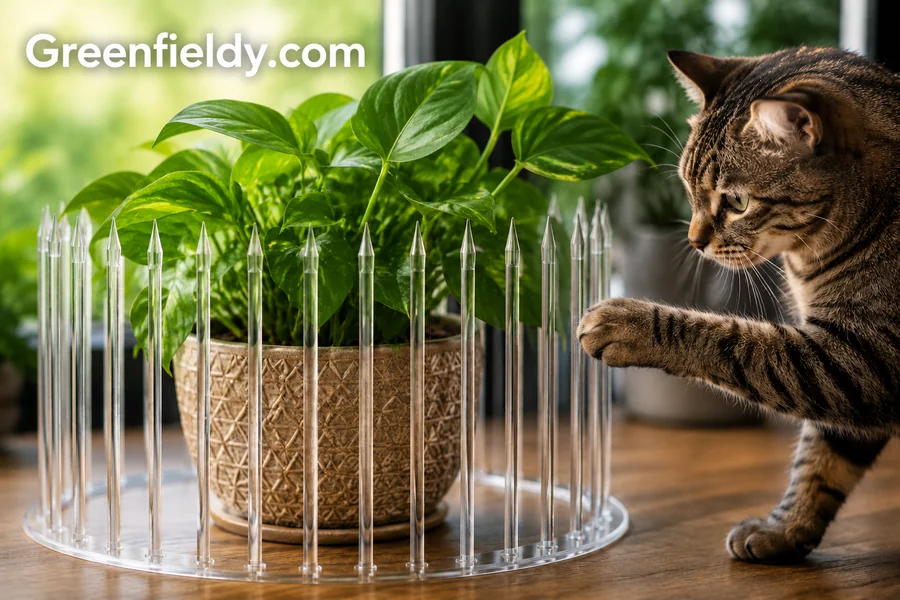
If you have ever walked into your living room and seen dirt on the floor and half chewed succulent on the carpet… you know the pain. Trying to protect houseplants from cats is one of the most common frustrations for plant-loving pet owners. The good news? It’s completely solvable. No, you don’t need to pick a choice between your plants and your cat. Once you have the right approach, you’re ready to go!
This guide covers everything to keep cat away house plant from quick fixes to long-term strategies — so both your plants and your cat can thrive under the same roof.
Why Do Cats Mess With Houseplants in the First Place?
To be able to correct the issue, it is useful to first understand it.
Cats are instinctively hunters and explorers. They nibble on plants for curiosity, boredom or instinct. In some cats, a “soil” scratch is simply the equivalent of the way they scratch and explore the outdoor floor they’re programmed to do that as they do. Others are drawn by the waving leaves as they appear like prey.
It’s not personal. Your cat is not out to destroy your monstera. They’re simply cats.
However, the behavior can be hazardous. Many houseplants are poisonous to cats, such as pothos, lilies, philodendron and dieffenbachia.
So learning how to protect houseplants from cats is also about protecting your cat.
Read Also: Snake Plant Yellow
How to Protect Houseplants from Cats: 10 Methods That Work
1. Use Physical Barriers
This is the most straightforward solution. Place your plants somewhere your cat physically can’t reach.
High shelves, hanging planters, and enclosed plant cabinets with glass doors all work well. Wall-mounted shelves are particularly useful — cats can sometimes jump to them, but not if the shelf is narrow enough that there’s no comfortable landing spot.
You can also use plant stands with wide bases that are hard to jump onto without knocking everything over. Cats don’t like unstable surfaces.
2. Try Citrus Deterrents
Cats dislike citrus. It’s one of the most consistent sensory aversions in domestic cats.
Place orange or lemon peel on top of the soil. Replace it every few days so the scent stays strong. You can also use citrus-scented sprays — just make sure they’re plant-safe before you apply anything near the roots or leaves.
This method works best as part of a broader strategy rather than a standalone fix. Some cats eventually stop responding to it.
3. Cover the Soil
A lot of cat behavior around houseplants is about the soil, not the plant itself. Cats dig in soil because it’s loose and familiar. Cover the surface and you remove the temptation.
Use river rocks, pinecones, pebbles, or aluminum foil over the top of the pot. Cats don’t like the texture of foil or the feeling of shifting rocks under their paws. It’s a low-cost fix that works surprisingly well.
Coco coir mats cut to fit the pot opening are another solid option — they let water through but block digging.
4. Use a Spray Deterrent
Commercial pet deterrent sprays are designed to keep cats away from specific areas. Many are scent-based and safe for use around plants. You spray around the base of the pot or on nearby surfaces — not directly on the plant.
You can also make a basic version at home. Diluted white vinegar or a water-and-rosemary spray applied to surrounding surfaces (not the plant itself) can discourage sniffing and chewing.
Test any spray in a small area first to make sure it doesn’t damage the surface you’re spraying on.
5. Give Your Cat Their Own Plant
Sometimes the simplest way to protect houseplants from cats is to redirect their attention entirely.
Grow a pot of cat grass (usually wheat, oat, or barley grass) or catnip specifically for your cat. Place it somewhere easy to access. Cats are often drawn to houseplants because they want to chew on something green — give them an approved outlet and they lose interest in the rest of your collection.
This strategy works especially well for cats that chew rather than dig.
6. Make Plants Less Accessible With Furniture Layout
Rearrange your space so plants aren’t tempting launch pads away from cat activity zones. Keep plants in rooms where the cat spends less time. Move them off low surfaces and away from furniture the cat already uses to jump.
Think about sight lines too. A plant sitting on a windowsill right next to a cat’s favorite perch is almost guaranteed to get attention. Move the plant three feet away and interest often drops significantly.
7. Use Double-Sided Tape
Cats hate sticky surfaces. Place double-sided tape around the base of pots or on shelves near plants. The moment a cat touches it, they retreat.
This method is useful as a short-term training tool. You don’t need to use it forever — just long enough to break the habit of approaching certain areas.
8. Introduce Natural Repellent Plants
There are some plants, however, that naturally repel cats due to their aroma. All kinds of plants are reported to keep cats away, including the scaredy-cat plant (Coleus canina), lavender, rue, and especially rosemary.
Position these close to plants to protect. While not effective for all cats, it’s another layer of prevention that won’t contain any chemicals.
If your cat does want to explore, just make sure that repellent plants are safe.
9. Train With Consistent Boundaries
This is a longer process but still will create lasting results. When your cat arrives at the plant, firmly say “no” and remove them. Don’t forget to praise them for being grain-eaters.
Cats are more likely to be affected by repetition and reward than punishment. Don’t water them or frighten them — it causes them anxiety, but doesn’t teach anything helpful.
After 2-4 weeks of consistency, most cats will figure out which places are not allowed.
10. Choose Cat-Safe Plants for Lower-Risk Spots
If deterrents don’t seem to be working at all, and your cat is persistent, you may want to think about changing plants for high-traffic areas.
Remove poisonous plants from low areas and replace them with cat-friendly plants such as spider plants, Boston ferns, areca palms, calathea or air plants. Avoid having plants in places where your cat can easily get at them that are poisonous or have high value.
This is not relinquishing, it’s smart design.
Read More: Do Deer Eat Vinca?
Which Houseplants Are Toxic to Cats?
It’s important to be aware of this. Please consult your vet if your cat chews on any of these.
Cats should not eat these toxic plants: Lilies (all types are extremely dangerous), pothos, philodendron, dieffenbachia, sago palm, aloe vera, snake plant, jade plant, peace lily, English ivy, ZZ plant, and oleander.
Cat-safe Houseplants: areca palm, calathea, cat grass, haworthia, orchid, peperomia, prayer plant and spider plant.
When you’re trying to how to keep pets away from houseplants, knowing which plants carry real risk helps you prioritize where to apply your effort first.
How to Cat-Proof a Room With Multiple Plants
If you’re a serious plant collector, you need a system, you don’t need individual fixes.
The first step is to inventory all plants in the room against the toxic/safe list above. If your cat comes across any toxic plants, put them right away on a high shelf or in a closed room.
Then, zone the remaining plants. Plants of the greatest value, or most fragile ones, should be grouped in a single spot that is easily accessible or fence off. Conclude with a series of soil covers, citrus repellents and furniture arrangement changes.
Place cat grass in a different part of the room as a distraction. Inspect weekly and replace any deterrents as needed.
If you do this regularly, you’ll have the majority of scenarios taken care of. Most of the time, redirecting will not need to be repeated for all of your plants — after a few weeks of steady redirection, most cats will develop new habits and leave your plants alone.
FAQs:
Q: How do I stop my cat from eating my houseplants?
Cover the soil to remove digging temptation, use citrus deterrents, and offer cat grass as an alternative. For persistent chewers, move plants out of reach and replace accessible toxic plants with cat-safe varieties.
Q: What smell keeps cats away from plants?
Cats strongly dislike citrus, vinegar, lavender, rosemary, and rue. Place citrus peels on the soil or use a diluted citrus spray on surrounding surfaces to deter them.
Q: Are coffee grounds safe to put in plant soil to deter cats?
Coffee grounds can deter cats and may benefit some plants as a fertilizer, but they are mildly toxic to cats in larger amounts. Use sparingly and only on the soil surface where the cat would taste them, not ingest a significant amount.
Q: What houseplants are safe if my cat chews on them?
Spider plants, Boston ferns, calathea, areca palms, peperomia, and African violets are all considered non-toxic to cats according to the ASPCA.
Q: Why does my cat keep digging in my plant pots?
Loose soil mimics outdoor ground that cats are instinctively drawn to scratch and dig in. Covering the soil with rocks, pebbles, or coco coir mats removes the texture that triggers this behavior.
Q: Will aluminum foil keep cats out of plant pots?
Yes. Most cats dislike the texture and sound of aluminum foil. Placing it on top of the soil or around the base of the pot is an effective short-term deterrent.
Final Words
Protect houseplants from cats doesn’t require giving up either your collection or your pet. There are some intentional changes, consistency and understanding of why your cat is behaving in that way that is needed. Always treat the plants that are most dangerous to your cat first, and then use 2 or 3 of the following techniques; and then customize based on your cat’s preferences. Results are seen within one week most of the time.
Read More Articles: Lamb’s Ear vs Mullein
About the Author