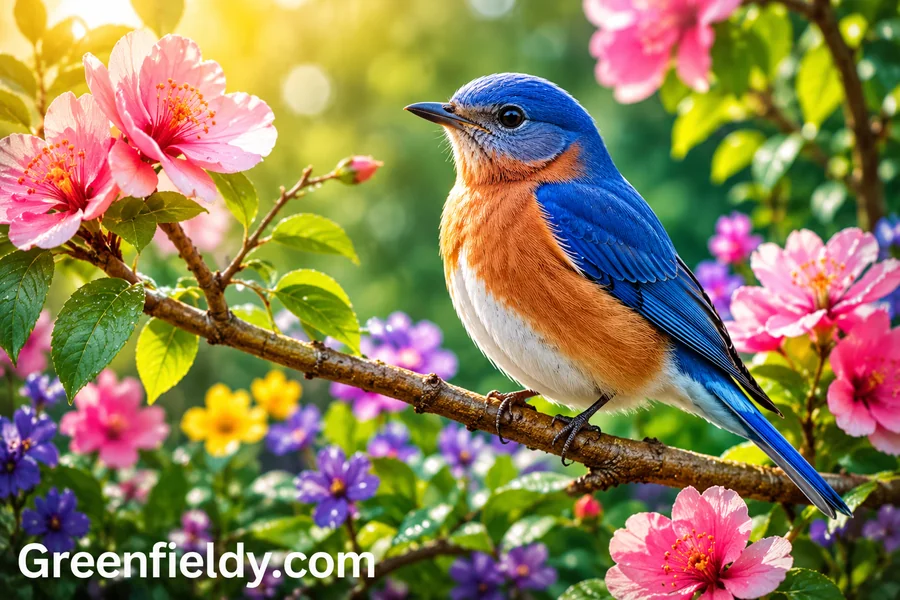
Now go outside on a nice early morning and listen. When there is no noise in your garden, it’s saying something.
One of the most sure-fire indicators of a garden that’s functioning — that there’s food, shelter and enough life to support something wild and small — is the presence of a garden songbird. If those birds cease to appear it’s typically a problem with that balance.
Discusses the most common garden birds, threats to their presence, their diet and what really works for attracting more birds.
What Exactly Is a Garden Songbird?
A garden songbird is any small bird (generally Passeriformes) that inhabits the vicinity of human dwellings and sings a song that is structured and musical and not a call or noise.
This includes robin, blackbird, wren, finch, sparrow and thrush. They are different from other garden birds in having a special voice-box (syrinx) which enables them to sing much more loudly and precisely than a pigeon or a crow can.
The majority of garden songbirds that visit a garden are residents year round. Once they locate a garden with consistent food and shelter they are likely to remain. This is very helpful to know — after all, what you do in your garden can have an impact for a long time.
Why the Garden Songbird Is Disappearing
This part gets skipped in a lot of bird guides. It should not be.
Several of the most familiar garden songbird species have lost between 40% and 60% of their population over the past three decades across parts of Europe and North America. These are not abstract statistics. Walk through an older neighborhood today and compare what you hear to what someone heard in the same street in 1990. The difference is real.
Here is what is driving it:
Tidier gardens — Hard paving, artificial grass, and perfectly maintained lawns offer nothing to a bird looking for insects, worms, or a place to nest. A neat garden is often a dead garden from a bird’s point of view.
Pesticides — Insects are the primary food source for most garden songbirds during breeding season. A garden treated with pesticides removes that food supply, even if feeders are present. A robin feeding chicks needs live, soft-bodied insects. A seed feeder does not replace that.
Cats — The American Bird Conservancy estimates that outdoor cats kill between 1.3 and 4 billion birds every year in the US alone. That number is not going down.
Noise and light at night — Both interfere with bird communication and nesting behavior in ways that are still being studied, but the effects on urban garden songbird populations are measurable.
Knowing this matters because most of the solutions are genuinely within reach of an ordinary garden.
The Most Common Garden Songbirds
United Kingdom
Robin (Erithacus rubecula) — A constant singer, year round; on grey January mornings when the rest of the world is silent. Perceptive, territorial, and easy to approach with mealworms.
Blackbird (Turdus merula) — The deep rich “flute-like” call you hear at dusk. The most familiar of all the garden noises in a British garden.
Song Thrush (Turdus philomelos) — Repeats two or three times before going on to a new phrase. The numbers have declined significantly since the 1970s.
Blue Tit (Cyanistes caeruleus) — A lively bird in good attendance at hanging feeders. Takes well to nest boxes.
Wren (Troglodytes troglodytes) — Tiny but genuinely loud. Most common garden bird by numbers in the UK but least noticed.
Dunnock (Prunella modularis) — Sometimes confused with a sparrow. Generally found in gardens with dense hedging, quiet and ground-feeding.
House Sparrow (Passer domesticus) — Once everywhere. Currently, a legitimate concern for many cities.
North America
American Robin (Turdus migratorius) — returns to lawns and gardens in early spring and is heard prior to sighting most mornings.
Song Sparrow (Melospiza melodia) — May have more than 50 song patterns. Very flexible and versatile; can be used in many garden styles.
House Finch (Haemorhous mexicanus) — A regular at seed feeders. The head and chest of males is rose-red and becomes more so with the quality of diet.
Carolina Wren (Thryothorus ludovicianus) — An overbearing little bird. Nests in holes and open-fronted boxes.
Northern Cardinal (Cardinalis cardinalis) — Both males and females sing, which is relatively uncommon. A spectacular winter or summer resident bird.
White-throated Sparrow (Zonotrichia albicollis) — A whistled, clear song that carries a long way on still mornings.
What Garden Songbirds Actually Eat
Getting this right makes a bigger difference than most people realize.
Insects and worms — These are the core diet for most garden songbirds during spring and summer, especially while feeding chicks. If your garden has no insect life, no feeder will fully compensate.
Seeds — Finches and sparrows eat seeds year-round. Sunflower hearts are the most efficient option — no husks, less mess, high uptake.
Berries — Blackbirds and thrushes eat heavily from berry-bearing shrubs in autumn and winter. Holly, hawthorn, elder, and rowan are all worth growing if space allows.
Suet and fat blocks — High-energy food that becomes important in cold weather. Tits, sparrows, and starlings use these heavily from November through February.
Mealworms — Dried or live, these are one of the most effective things you can put out. Robins in particular will find them quickly and return reliably.
One thing to avoid: bread. It fills birds up without providing nutrition. During nesting season, bread fed to chicks can cause real harm.
Read More: Do Deer Eat Vinca?
How to Attract Songbirds to Your Garden Creating a Bird Friendly Habitat
Start With a Feeder
A hanging feeder with sunflower hearts or mixed seed will start drawing birds within a few days in most areas. Place it near cover — a hedge, a shrub, a fence with climbing plants — so birds have somewhere to retreat to quickly if they feel exposed. Clean it every couple of weeks. Dirty feeders spread disease and will stop birds using them.
Add Water
A shallow dish, a birdbath, even a plant saucer — garden songbirds need to drink and bathe regularly. Change the water every day or two. In winter, float a small ball in it overnight to slow icing. This single addition pulls in more species than most people expect.
Grow Something Native
Ornamental plants look good but often offer little to wildlife. A native shrub — hawthorn, elder, dog rose, or similar — produces the insects and berries that garden songbirds actually need. Even a small section of wildflower planting makes a measurable difference to insect life, and insect life means birds.
Leave Corners Alone
A pile of leaves in the corner. An uncut patch near the fence. A rotting log left on the ground. These are not untidy — they are insect habitats. Insects attract wrens, robins, and thrushes far more reliably than any feeder will.
Put Up a Nest Box
Different species need different designs. Robins and wrens prefer open-fronted boxes placed lower down. Blue tits and great tits use enclosed boxes with a 25–32mm hole. Fix them at 1.5 to 3 metres off the ground, facing somewhere between north and east to avoid the hottest afternoon sun.
Cut Back on Pesticides
This is the most impactful change most gardens could make. A garden with no insect life cannot support creating a songbird garden at the level that a garden with insects can — regardless of how many feeders are out. Reducing pesticide use addresses the root cause rather than working around it.
Read More: Lamb’s Ear vs Mullein
When Do Garden Songbirds Sing?
Most vocal activity happens in the early morning, peaking between March and July in the Northern Hemisphere. This is the dawn chorus — a period when male birds sing to claim territory and attract mates. Volume and variety both peak in late April and May.
The blackbird typically starts before sunrise. Robins are close behind. Song thrushes, wrens, and various finches join as the light increases.
Robins are unusual in that they sing through autumn and winter as well. If you hear birdsong in your garden on a quiet December morning, it is probably a robin.
One more thing worth knowing: garden songbirds sing more immediately before and after rain. The air pressure changes affect insect activity, which in turn affects bird behavior. If the garden suddenly comes alive just before a shower, that is why.
Garden Songbird vs. Other Garden Birds
Not everything that visits your garden is a garden songbird.
The list of garden birds includes a variety of non-songbirds such as pigeons, crows, magpies, jackdaws and gulls. They do not sing songs, only calls, they are not even from the same bird families.
Common types of songbirds is a species of passeriform that have a syrinx and can sing layered melodic songs. This is the difference between a wood pigeon perched on a fence and a wren or a blackbird perched on a fence.
Quick Facts: Garden Songbird
- Roughly 4,000 songbird species exist worldwide
- The wren is the UK’s most numerous garden songbird
- A song sparrow can learn over 20 distinct song variations
- Songbirds help keep garden insect pest populations in check naturally
- Blackbirds can live up to five years in the wild
- Many garden songbirds return to the exact same nesting site each year
FAQs
Q: What is a garden songbird?
A: A garden songbird is a small bird from the Passeriformes order that lives near residential gardens and produces complex, melodic songs. Common examples include robins, blackbirds, wrens, sparrows, and finches.
Q: How do I attract garden songbirds to my garden?
A: Put up a seed feeder, add a shallow water dish, grow native berry-bearing plants, leave leaf litter for insects, and install a nest box suited to local species. Reducing pesticide use has the biggest long-term impact.
Q: What do garden songbirds eat?
A: Garden songbirds eat insects, earthworms, seeds, berries, suet, and mealworms. Most species feed chicks almost entirely on live insects during spring and summer, so insect life in the garden matters more than feeders during breeding season.
Q: Why are garden songbirds declining?
A: The main causes are loss of insect-rich habitat, pesticide use, predation by outdoor cats, and the replacement of gardens with hard surfaces. Noise and light pollution in urban areas also play a role.
Q: When is the best time to hear garden songbirds?
A: Early morning from March through July is peak singing time. Robins are an exception and sing through autumn and winter too. Most songbirds also increase vocal activity just before rain.
Q: What is the most common garden songbird in the UK?
A: By population the wren holds that title, but the robin is the most recognized garden songbird in Britain and is widely considered a national symbol.
Q: Are all birds that visit gardens classed as garden songbirds?
A: No. Pigeons, magpies, and crows are garden birds but not songbirds. Songbirds specifically belong to the Passeriformes order and produce structured, musical songs through a specialized vocal structure called the syrinx.
Final Note
A garden songbird does not need a lot. It needs food it can actually use, water it can reach, and a space that has not been stripped of every wild thing. Most of that is achievable in an ordinary garden without much effort or cost. The birds will do the rest.
Read More Articles: When Is Mushroom Season?
About the Author